You’ve probably noticed: you open a news portal — and there’s a banner featuring the exact smartphone model you googled the day before. It seems like magic, but it’s actually programmatic advertising. Technology that determines in milliseconds which ad creative to show specifically to you. And all this happens without live managers, negotiations, or long approval chains.
Remember what ad buying looked like just ten years ago. Want a banner on a major portal? You call the sales department, haggle over price, wait for an available slot, sign paperwork. Programmatic advertising has completely changed the rules. Today, algorithms independently find your target audience and buy ad impressions — automatically, in real time.
In this article, we’ll break down what programmatic advertising looks like in practice, what elements make up its ecosystem, what formats and buying models are available to advertisers, and how to launch programmatic advertising from scratch without making typical mistakes.
What is programmatic advertising in simple terms?

To explain without unnecessary jargon: programmatic advertising is the automatic purchase of ad space through digital platforms. Forget endless negotiations with website owners. You simply upload your ad materials, specify who you want to reach, set your budget — and the system handles the rest. It independently determines whom, on which resource, and at what moment to show your ad.
Let’s break it down with an example. Imagine you sell board games for family evenings. Previously, you’d have to manually negotiate with dozens of platforms: entertainment portals, parent forums, niche blogs. Algorithmic ad buying works differently: the system analyzes data and independently finds people interested in family recreation, reading game reviews, browsing children’s products on marketplaces. And it shows them your banner — even if they’re currently scrolling through pie recipes or planning a vacation.
It’s important to understand the difference between contextual and programmatic advertising here. Context responds to search queries: a person types “buy board game” — sees an ad. Programmatic relies on behavioral data and interests. Thanks to this, you “catch” potential customers much earlier — not at the moment of active search, but when they’re just starting to explore the topic.
To grasp the scale: according to current estimates, over 80% of all display advertising worldwide now flows through programmatic platforms. This is no longer an experimental channel for advanced marketers, but a basic industry standard.
How does programmatic advertising work?
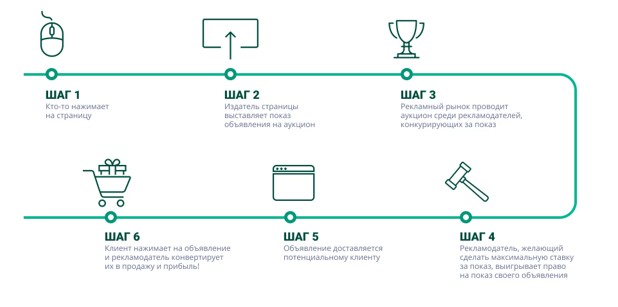
Let’s examine how automated ad buying works. In practice, the process looks like this:
- Website owners planning to host ads register on a special platform. This is where the auction will take place.
- A user opens a website — say, a news portal.
- The SSP platform connected to this site records: there’s available ad space. Simultaneously, it collects data about the user — approximate age, interests, geolocation, device type.
- This information goes to an ad exchange (Ad Exchange), which instantly sends requests to connected DSP platforms.
- Each DSP checks: does this user match the parameters of any active ad campaign? If yes — it places a bid.
- Ad Exchange collects all bids within milliseconds and selects the winner — whoever offered the highest price for the impression.
- The winner’s ad loads onto the page and is shown to the user. They see a banner or video, unaware that a mini-auction with dozens of advertisers just took place.
- After the impression, data on results (click, conversion, view time) returns to the system. The algorithm learns and adjusts strategy — optimizing bids, disabling ineffective placements, redistributing budget.
This entire cycle repeats for every impression. Automated ad buying works non-stop, 24/7.
Advantages of programmatic advertising
Why is business mass-migrating to programmatic advertising? There are many reasons, but here are the main ones:
- Precise targeting. You show ads not to “everyone,” but to specific segments: by age, gender, interests, behavior, geolocation, device type. You can even target people who were in a specific location — say, near your store.
- Speed of launch. Register on the platform, upload creatives, set up the campaign — and it’s already running. No approvals, emails, waiting. Statistics are available in real time.
- Budget optimization. The algorithm redistributes money itself: disables ineffective placements, increases bids where conversion is higher. You don’t pay for “empty” impressions — the system strives for maximum return on every hryvnia spent.
- Scalability. Need to double your reach? Simply increase the budget. Programmatic platforms have access to millions of placements, so finding additional audience is no problem.
- Analytics and transparency. You see which sites show your ads, how much each impression costs, which creatives perform better. All in one window.
Another important advantage — the ability to work simultaneously with multiple channels: banners, video, audio, DOOH. And manage all of this from a single interface.
Main disadvantages of algorithmic ad buying
It would be dishonest to only talk about the positives. Algorithmic advertising has pitfalls worth knowing about in advance:
- Fraud (fraudulent impressions). Bots can drain your budget. This is a problem for all online advertising, and programmatic is no exception. The solution is to use platforms with built-in anti-fraud tools and regularly check reports. If CPM is suspiciously low while CTR is suspiciously high, it’s time to be alert.
- Risk of placement on undesirable platforms. The algorithm searches for users, not sites. So theoretically, your banner could appear next to content that doesn’t match your brand image. To avoid this, set up website blacklists and use Brand Safety filters.
- Entry threshold. Effective testing requires a certain budget. Launching a campaign for 500 UAH and expecting results is not the best strategy. The recommended minimum for a first test is 10,000–15,000 UAH, so the algorithm can gather enough data and optimize.
- Complexity for beginners. The number of settings, abbreviations, and platforms can be overwhelming at first. This is normal. Many companies start by having platform specialists set up and manage the campaign initially. Although “one-click launch” is also available. However, to effectively manage such campaigns, you need to understand attribution models, bidding strategies, and working with data. Otherwise, regardless of budget, there’s a high probability of getting “empty” traffic.
- Dependence on data quality. If audience data is poor or outdated, targeting effectiveness drops sharply. To avoid this, regularly update remarketing lists, invest in quality data collection, and use DMP to integrate data from different sources.
Which platforms power programmatic advertising?
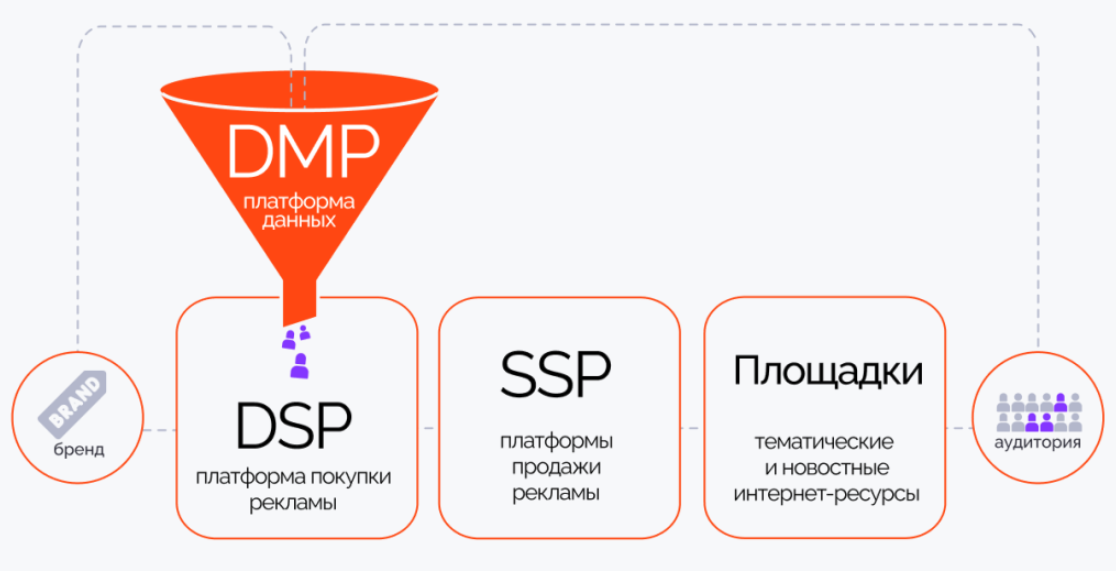
Programmatic advertising rests on an entire ecosystem of specialized platforms. The names sound like codes made of Latin letters, but the logic behind them is quite understandable:
- DSP (Demand Side Platform) — the advertiser-side platform. This is where you upload your creatives: banners, video, native ads. This is also where you set targeting — gender, age, geography, interests, device type. Think of DSP as your ad campaign control panel. For example, if you’re promoting English courses, through DSP you can specify: “show ads to Kyiv residents aged 25–40 who are interested in education and career.”
- SSP (Supply Side Platform) — the platform for website owners (called publishers). Through SSP, web resources put their ad space up for sale. The logic is market-based: the higher quality and purchasing power of a site’s audience, the higher the price per impression. A news portal with a million-strong audience and a niche fishing blog are completely different “shelves” in the store of advertising opportunities.
- Ad Exchange — the ad exchange where DSP and SSP “meet.” Auctions happen here: several advertisers compete for the right to show an ad to a specific user. Whoever offers more — gets the impression.
- DMP (Data Management Platform) — the data management platform. It collects and systematizes information about audiences: which sites a person visits, what they search for, what purchases they make. This data makes targeting more precise. For example, DMP can “tell” the system that a specific user visited car dealer websites three times in the past week — so it’s worth showing them an auto dealership ad.
How does all this work together? Imagine a chain of events:
A user opens a news website page. → SSP instantly tells the exchange: “Available ad space, audience — 35-year-old man from Kharkiv, interested in sports.” → The exchange sends this request to connected DSPs. → Each DSP analyzes the data in a fraction of a second and decides: does this person match active campaign criteria? → If yes — places a bid. → The most favorable offer wins — and the ad appears on screen.
This entire process takes about 100 milliseconds. For comparison: a blink lasts 300–400 milliseconds. The page hasn’t even fully loaded yet, and the ad space is already sold and filled.
Types of programmatic advertising (buying models)
Algorithmic advertising isn’t just auctions. There are several models, and the choice depends on your goals and budget:
- RTB (Real-Time Bidding) — real-time bidding on an open auction. The most common option. All advertisers compete equally for the impression. Whoever offers more — wins. Suitable when you need broad reach and are willing to pay market price.
- PMP (Private Marketplace) — closed auction. Everything is the same, but only invited advertisers can participate. For example, a major news portal opens bidding only to select brands — this way it controls ad quality on its site. And the advertiser knows exactly where their banner will appear.
- Programmatic Direct — direct deal. Advertiser and site agree on a fixed price in advance. No auction. This format suits branding campaigns when it’s important to guaranteed appear on a specific resource.
- Programmatic Guaranteed — guaranteed buying. The advertiser purchases a predetermined volume of impressions at an agreed price in advance. For example, 500,000 impressions on a popular portal over a month. Both sides get predictability: the site gets revenue, the advertiser gets guaranteed placement.
For businesses with limited budgets, it’s best to start with RTB — this is the most flexible and accessible format. PMP and Direct require more serious investment but offer more control.
In what formats is automated ad buying possible?
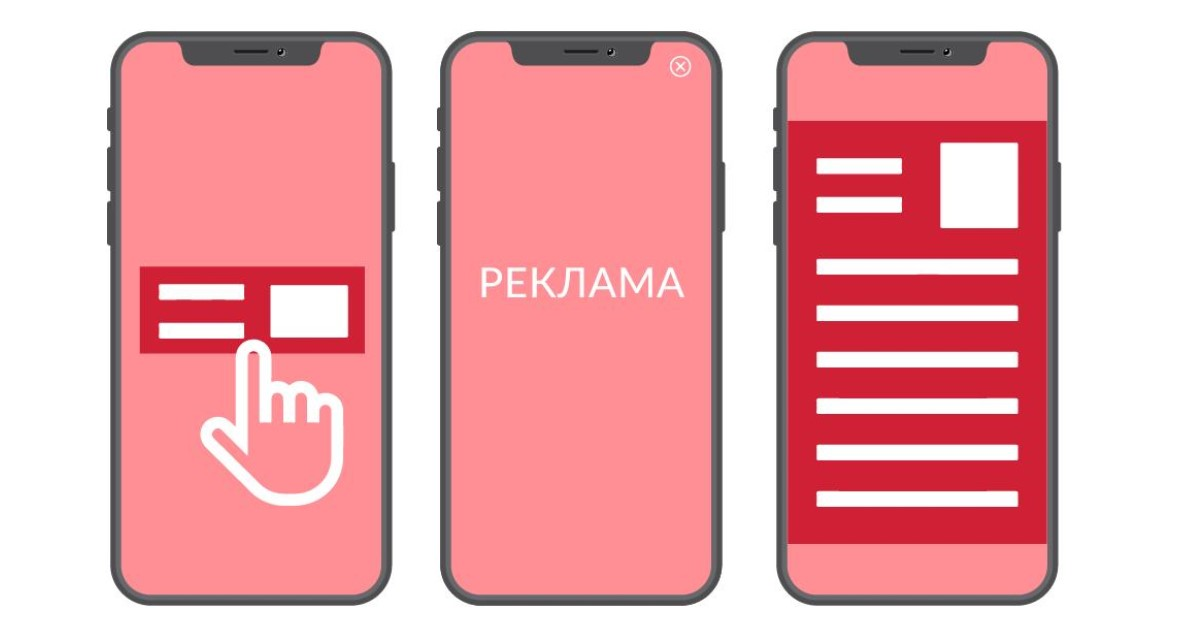
Automated ad buying has long moved beyond familiar banners. Today, such variety of formats is available that you can find an effective channel for practically any audience and task.
- Display advertising. Tried-and-true classic: static images and animated blocks on web pages. Rich-media formats deserve special attention — interactive banners that “expand” on hover or click. They noticeably stand out from standard ads and gather more interactions.
- Video advertising. Short clips embedded in video content: before the start (pre-roll), in the middle (mid-roll), or after viewing (post-roll). There’s also out-stream video — it appears right inside a text article, without being tied to a video player. If your audience spends time on YouTube, in mobile apps, or on streaming services — this format is familiar to them.
- Native advertising. The ad disguises itself as the platform’s organic content and is perceived as its natural part. A typical example — “Read also” blocks at the end of articles, where an ad appears among editorial materials. The reader sees a useful recommendation, not intrusive advertising. An educational platform can promote an article “5 ways to learn a language in six months” — and it will organically fit between regular publications.
- Audio advertising. Ads in podcasts, on music streaming services, or online radio. This format is gaining momentum because audio content is consumed more actively — while jogging, driving, doing household chores. A sports nutrition brand can “catch” a fitness podcast listener at the most relevant moment.
- DOOH (Digital Out-Of-Home). Digital screens and billboards in shopping centers, at public transport stops, along busy highways. And yes — these can also be purchased through programmatic platforms. In Ukraine, this segment is actively developing: integration of digital panels with algorithmic buying systems is already working. Imagine: a coffee shop network shows ads for hot lattes on metro screens specifically in the morning, when people are commuting to work.
- CTV (Connected TV). Advertising on Smart TV and streaming platforms. A viewer turns on a series on a connected TV — and sees ads selected by algorithms personally for them. This is no longer “advertising for everyone,” but pinpoint targeting: a family with children sees an amusement park ad, while a travel enthusiast sees a tour operator offer.
How to launch programmatic advertising?
If you’ve decided to launch automated ad buying — here’s a step-by-step plan to help avoid losing your budget at the start.
- Define your goal. What do you need: brand reach and awareness, website traffic, leads, sales? The goal determines everything else — ad format, buying model, KPIs.
- Study your audience. Who is your customer? How old are they, what are they interested in, which sites do they visit? The more accurate the portrait, the more effective the targeting. Divide your audience into segments: for example, “women 25–35, Kyiv, interested in cosmetics” and “men 30–45, all Ukraine, interested in cars.”
- Choose a platform. Several programmatic platforms operate in the Ukrainian market. Among international ones — Google Display & Video 360, which provides access to enormous inventory. From local solutions — Getintent (present in Ukraine), Admixer, and others. When choosing, pay attention to available sites, targeting capabilities, and minimum budget.
- Prepare creatives. Banners, video, native ads — depending on format. Create several versions for A/B testing. Two or three headline variations, different images, different calls to action. The algorithm will determine which creative performs best.
- Set up the campaign. Set targeting, budget, impression schedule, payment model (most often CPM — cost per 1000 impressions). Don’t forget to set up site blacklists and frequency capping — so you don’t annoy users.
- Launch and monitor. The first 3–5 days are the algorithm’s learning period. Don’t make drastic changes. Watch key metrics: CPM, CTR, CPC, conversions. If after a week results are far from expected — adjust targeting, change creatives, redistribute budget.
Tip: start with a small budget and one or two audience segments. Scale only what has already shown results. Programmatic loves data — the more accumulates, the more accurate the optimization.
Examples of programmatic advertising in action
To make it even clearer, let’s break down several specific scenarios:
- Online clothing store. You sell winter jackets. Through a programmatic platform, you set up a campaign: women 25–40 years old, living in Kyiv and region, interested in fashion. The system finds these users on hundreds of different sites and shows them your banner with a jacket and price in UAH. No need to negotiate with each site separately — the platform does this itself.
- Remarketing for a food delivery service. A user visited your site, browsed the menu, but didn’t place an order. Programmatic “catches up” with them with ads on other sites: “Forgot to order? 15% discount on first delivery.” Familiar situation, right? This is programmatic in action.
- DOOH campaign. A cosmetics brand places ads on digital screens in Kyiv shopping centers. Through a programmatic platform, you can select specific screens, display time, and even account for weather — for example, only showing sunscreen ads on hot days.
- Video advertising for a mobile app. You’re launching a new English learning app. A 15-second pre-roll clip plays before videos on entertainment platforms. Targeting: 18–30 years old, interested in education and travel. Cost per 1000 impressions (CPM) — from 80 to 200 UAH depending on the site.
Why will programmatic advertising’s share only grow in the future?
The programmatic advertising market shows steady growth year after year. Analysts predict that by 2028, global programmatic buying volume will surpass 770 billion dollars. But behind this impressive figure lie quite specific technological and market shifts.
Thus, browsers are gradually blocking third-party cookie files, on which behavioral targeting has been built for decades. What are programmatic platforms doing? Adapting. Alternative approaches are gaining momentum:
- Contextual targeting — ads are selected based on page content, not user browsing history. A person reads an article about renovation — sees a hardware store banner.
- First-party data — data that businesses collect themselves: through CRM systems, loyalty programs, website subscription forms. By the way, this is a weighty argument to start building your own customer base today, not putting it off for later.
Additionally, artificial intelligence is also changing the rules. Modern algorithms have long moved beyond simply choosing placements. In real time, they select creatives for specific users, adjust bids, predict conversion probability. Essentially, AI turns every impression into a micro-experiment with instant optimization.
Moreover, programmatic is moving beyond the computer screen. Digital billboards on streets, advertising on Smart TV, banners inside mobile games — all of this is already integrated into a unified ecosystem of automated buying. The boundaries between online and offline are blurring.
For Ukrainian business, programmatic is a real chance to reach global standards of online advertising. Companies aiming for growth should master this technology now, while competition for quality ad inventory hasn’t skyrocketed.