Hello, everyone! This is Yana Lyashenko, Google Logistician. My job is to bring businesses target customers with the right characteristics.
Today we will discuss an important topic: what kind of advertising should local businesses launch in the US and Canadian markets. We will talk about niches such as home appliance repair or carpet cleaning — that is, service companies that operate in a specific city or region.
All the recommendations I will share are based on real experience—consultations and projects with clients from these specific markets. If you work in a similar niche but in a different country, the general strategy and logic will be roughly the same. Of course, local characteristics still apply: some places have their own auction specifics, while others have different user behavior patterns. If you are interested in an analysis specific to your country, please write in the comments, and I will prepare a separate article.
For now, let’s focus on the American and Canadian markets. I will tell you what types of advertising campaigns to launch in order to get the first applications as quickly as possible, how much it will cost approximately, and what results you can expect.
Types of Google advertising for the fastest results
For the service sector—whether it’s cleaning, equipment repair, or any other location-based service—I recommend two basic types of campaigns:
- Search advertising campaign based on keywords;
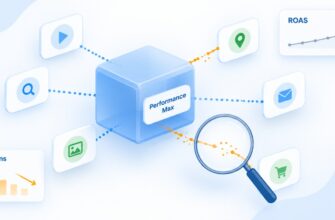
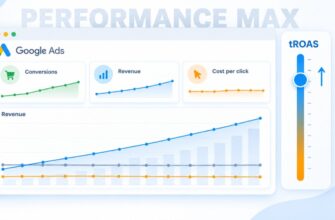
- Performance Max.

Why these two in particular? Search advertising works with already established demand: someone types “refrigerator repair in Houston” into Google and sees your ad. This is hot traffic, ready to place an order right here and now.
Performance Max connects a little later — usually by the end of the first, second, and sometimes third month of account operation. Why not right away? This campaign needs data for training: conversions, audience signals, accumulated statistics. But once it gets going, the results may surprise you — order growth often exceeds that of a classic search campaign.
Don’t ignore Performance Max, even if it seems like search is doing the job at first. It’s an essential tool for scaling. Next, we’ll take a closer look at each type, with specific settings and examples.
Classic search advertising campaign
Search advertising is a proven tool that you can confidently start with. It doesn’t matter if you’re starting from scratch or already have an old Google Ads account — this type of campaign works in both cases.

1. Keyword selection
The result directly depends on how competently you select keywords. Keywords are queries that we upload to the Google system and ask to display our ads for. If you choose them correctly, you will get hot customers. If you make a mistake, you will waste your budget on non-targeted traffic.
A common mistake made by beginners is chasing volume. There is no need to compile lists of three or four thousand keywords. For a local service business such as appliance repair or cleaning, 10–20 keywords are quite sufficient. The main thing is that each of them reflects the intention to order a service.
Consider the difference. There is a request to “call a dishwasher repair technician” — the person has already made a decision and is looking for someone to do the job. And there is a request for “Bosch dishwasher error E15, what to do” — here, the person is still trying to understand the problem. Perhaps they want to fix it themselves. Perhaps they have just started looking for information. Such a request is not your customer, at least not right now.
Which requests should be prioritized:
- “Call a repair technician [appliance]”;
- “Repair [appliance] + [city]”;
- “Urgent repair [equipment]”;
- “[Service] near me” (e.g., “carpet cleaning near me”).

Which requests are best to postpone or exclude:
- “How to repair [appliance] yourself”;
- “Why isn’t [the equipment] working?”
- “Error on [device]";
- "The oven broke down, what should I do?"
This does not mean that the keyword must necessarily include the phrase "call a repairman." But the query itself must correspond to the image of a person who is ready to order a service right now. Not someone who Googles "pipe burst, how to fix a leak" or "clogged ventilation, DIY." The more accurately you match the user's intention, the more requests you will receive from the same budget.
2. Conversion settings
Conversion is the recording of a target action on a website: the moment when a potential customer provides you with their contact details. This includes submitting an application form, making a phone call, requesting a callback, and similar actions.
Why is this necessary? Without configured conversions, you only see clicks and budget expenditure, but you don't understand which keywords are actually generating real leads. Let's say you have 30 keywords in your campaign. In practice, it often turns out that only 2-3 of them generate the main flow of orders, while the rest simply "eat up" money.

There is another situation: requests seem to come from many keywords, but upon closer inspection, most of them are irrelevant. A person left a request, but they need a service in another city, or they just wanted to find out the price without intending to order.
Once conversions are set up, you can:
- See statistics for each keyword — how many applications it brought in;
- Compare data from Google Ads with your internal analytics or CRM;
- Identify the group of keywords that attract non-target customers;
- Disable ineffective keywords and reallocate the budget to those that work.
For example, you see that the query "appliance repair near me" brought in 15 requests, 12 of which turned into orders. The query "how to fix dishwasher" brought in 10 requests, but none of them converted into customers — people were just looking for free advice. Without conversion tracking, you wouldn't know this and would continue to waste money.
Performance Max
Remember when I talked about the importance of conversion tracking? This is where it will play a key role. When you set up the tracking of all target actions correctly from the very beginning — right down to outgoing calls — you accumulate a valuable database. And somewhere around the beginning of the second, and sometimes third month of work (depending on the market volume and number of applications), you can launch the second type of campaign — Performance Max.

If you google information about this tool, you will most likely come across cases involving online stores. But Performance Max is a universal tool that Google is actively developing. It also works great for the service sector.
What is it? It is an automated advertising campaign based on machine learning. The system analyzes your database: accumulated conversions, the quality of these conversions, customer profiles, and search query history from your search campaigns. Based on this data, it learns to find target customers faster and more accurately than traditional search.
How does a typical search campaign work? A person enters a query into Google right now—for example, "call a washing machine repairman"—and sees your ad. You catch them at the moment of active search.
Performance Max goes further. First, it goes beyond the limited scope of search queries. Second, based on accumulated statistics, the system determines the user's intent with a high degree of probability. Let's say a person Googles "F21 error on Bosch washing machine" or "washing machine door won't open after washing." Formally, this is an informational query. But machine learning already understands that this particular user is very likely to order a repairman.
Can you feel the difference? A classic search campaign shows ads to everyone who enters a specific query — both those looking for a professional and those who simply want to figure out the problem on their own. Performance Max, on the other hand, already knows based on data that this person is ready to order a service. The only question is whether they will order from you or your competitor.
Effectiveness of advertising campaigns
So, for a local service business, you only need two types of advertising campaigns: search and Performance Max. These are the two foundations, the two pillars on which the entire system is built. Launch them sequentially: first search, then Performance Max, once you have accumulated statistics. If you already have conversion data from previous campaigns, you can start with both tools at the same time.
What you definitely don't need at the start:
- Video advertising
- Banner advertising (CMS/Display);
- Remarketing campaigns.
All of these are tools for other tasks and other stages. They do not work for quickly obtaining applications in local business. Do not spread your budget too thin.
Now, let's talk about results. How many requests you receive and at what price depends primarily on location. How large is the city or area you cover? What is the service radius of your business?
Local businesses always operate within a specific geographical area. There is no point in advertising across the entire state if your technicians only travel within one city or even a few districts. Traveling more than 50 miles means additional costs, wasted time, and, as a rule, an unprofitable job.
The impact of website quality on advertising effectiveness
The second factor that determines the outcome is the quality of your landing page. I know, some of you are thinking, "It's my website's fault again." But let's take a closer look.
I would compare Google advertising to a blind date. Imagine: someone describes the person you are about to meet. The description is perfect—tall, slim, intelligent, successful. You arrive for the date, and there... it may be exactly as promised. Or it may be completely different. The person embellished the description, and reality did not match expectations.

It's the same story with paid advertising. An advertisement is your self-presentation, that description before a date. The more attractive you present yourself, the more people click and go to the site. But the order is placed on the site — and depends on what is written there, how you presented yourself, what information you provided.
Put yourself in the buyer's shoes. Think back to your last online purchase. There is a huge selection, dozens of offers. You need to decide somehow — who to order from and why exactly from them. A click on your website does not mean that the person has not opened 3–4 competitor websites at the same time. There's no guarantee that they haven't gone to YouTube to watch reviews or read comments — about you or about those who are next to you in the search results.
You are constantly competing. Even if there are only two or three services operating in your location, you are still competing with each other. And the quality of the information on the landing page determines who the customer will choose.
Here is a specific example. A person is looking for home appliance repair services, clicks on your ad, visits your website, and does not understand what exactly you offer. There is no clear description of your services, no benefits of working with you. But your competitor Michael has laid everything out on his website: how quickly a technician can arrive, repair times, approximate prices, examples of work, customer reviews, and information about himself and his experience. Who do you think they will choose? Most likely Michael.
Landing is the moment when you arrive at a blind date. Advertising can be brilliant, but if the website doesn't "sell," there will be no conversion.
Now let's talk numbers. If your landing page is well-designed, covers everything I mentioned above, and you regularly improve it based on analytics and comparisons with competitors, the cost per lead will be around $15. The worse your website is and the better your competitors' self-presentation is, the higher the price will be — up to $60 per lead. With an average check of $200, you can already estimate the profitability.
An important nuance: why is it important to constantly work on your website? For the American market, this may not seem like the most obvious point: you have a website, it seems to be working, so what else is there to improve? But be prepared: improving your website is a never-ending process. Just accept it as a given. If you are not working on improving your landing page, it does not mean that your competitors are sitting idly by. Some launch two or three websites at the same time to test which option works better and take up more space in the search results.
Reasons to improve landing pages
The advertising auction you are participating in is a living organism. Imagine an anthill: something is constantly happening there, everything is moving and changing. Competitors come and go, change bids, test new ads, and refine their websites. You need to be ready to get involved in this dynamic, otherwise you risk being left behind.
The quality of your landing page directly affects the effectiveness of your advertising. But there is another important point that many people forget. When you want to scale up and launch Performance Max — which, I remind you, generates more leads than classic search thanks to machine learning — the quality of your website will become critically important.
Why? Performance Max operates automatically. The system already knows which queries and user profiles are most likely to convert. It is impossible to achieve this level of accuracy with a regular search, even after extensive testing.
Here's how it works in practice. Let's say the automation finds the perfect customer — someone who actively buys from local businesses in your niche and is ready to spend money right now. The system shows them your ad, they go to the website... and leave without doing anything. They didn't fill out the form, didn't call, didn't convert.
What happens next? In the best-case scenario, the algorithm will start reducing impressions, deciding that your offer is not interesting to the target audience. In the worst-case scenario, it will start randomly sorting through different user profiles in search of someone who will convert. The result: your budget is spent, and you have zero applications.
Therefore, working with a landing page is not a one-time task, but an ongoing process. It is the foundation without which even the most sophisticated automation will not be able to bring you customers.
What can be improved on the landing page?
How do you know what to work on? Start with the first two screens of your website—this is where people decide whether to stay or leave. These screens should clearly spell out the benefits of working with you. Customers should immediately find answers to four questions: what can I buy, why do I need it, why here, and why now?
What usually works as an advantage:
- Speed of technician arrival (e.g., "we will arrive within an hour");
- Deadlines for completion of work;
- Transparent prices or free diagnostics;
- Service warranty;
- Reviews from real customers.
Every business has its strengths. Look at what your competitors are saying and think about how you can stand out. Perhaps you have a team of certified specialists working for you. Or maybe you've already accumulated a database of reviews on Google Maps — use it.
Use of behavior tracking services
I recommend installing user behavior analytics services on your website. For example, Microsoft Clarity is completely free. There is also Hotjar, but it is a paid service. These tools record visitor sessions and display heat maps of clicks.
Even if you do your own advertising without a team of specialists, set aside time at least once a quarter to review session records. The more traffic your website has, the more often you should do this.
What to pay attention to:
- Where exactly people leave the site;
- Do users click on elements that are not buttons (meaning they expect a link there — perhaps it is worth adding one)?
- How far down the page users scroll.
If you see that 80% of visitors don't go beyond the first two screens, that's a signal. It means that all key information and calls to action should be concentrated there. The rest of the page simply doesn't work.
Results
Finally, the most important thing. Website conversion is the ratio of requests received to the total number of visitors. The higher the conversion rate, the more orders you get from the same amount of traffic. And traffic in competitive niches is expensive. By working on conversion, you actually reduce the cost of attracting a customer without changing your advertising budget.
So, we have covered a complete set of strategic and technical recommendations for a local business advertising account. Now you understand the sequence of actions: where to start, how to scale up using Performance Max, why you need an accumulated conversion base, and why working with a landing page is not a one-time task but an ongoing process.
If you have any questions, please write them in the comments and we will address them.