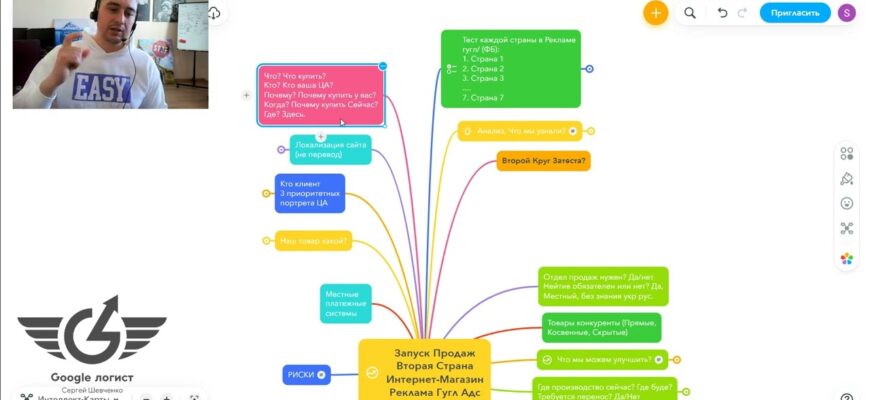
Hello! My name is Sergey Shevchenko, and today I want to talk about a topic that eventually faces every growing business — launching sales in a new country with Google Ads.
Who should familiarize themselves with this material? First and foremost — those who already have a working project in Ukraine. An online store generates stable sales, processes are streamlined, and a logical question arises: what’s next? Expand? Which European country should be chosen next for effective scaling?
That’s what we’ll discuss — how to approach choosing a new country, what to pay attention to, and how to eventually put entering new markets on autopilot. Let’s go.
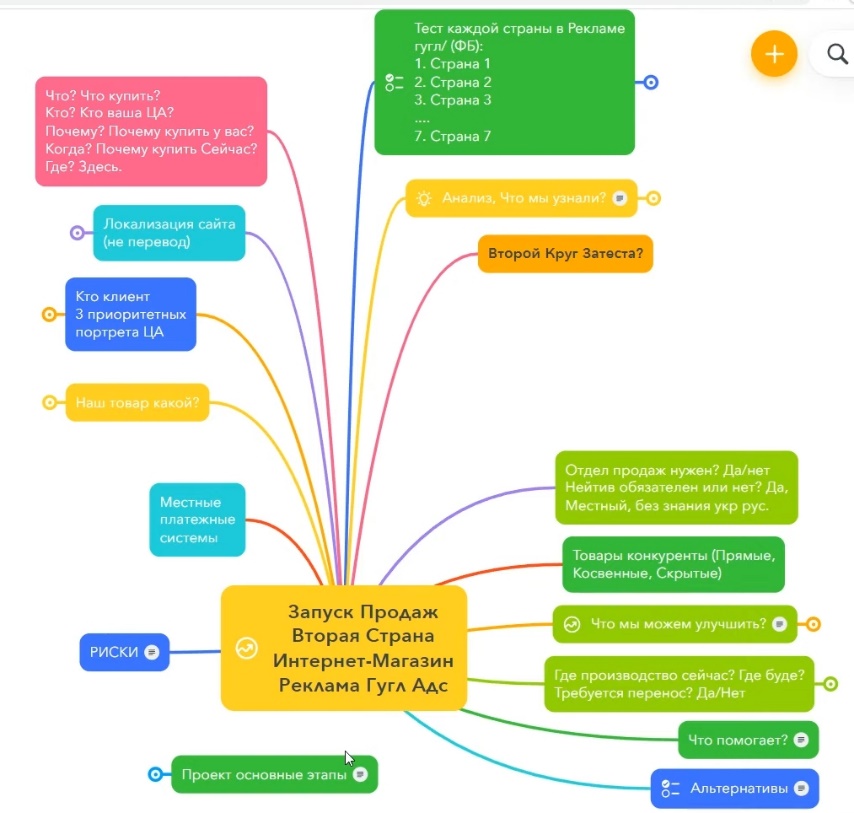
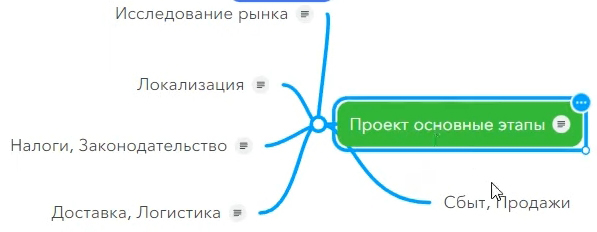
Project. Main Stages
When a business starts thinking about expansion, a list immediately appears: market research, website localization, taxes, legislation, delivery, logistics, sales organization. It may seem like an insurmountable task. The path is long, and sales and payback are at the very end.
Risks
The most obvious one: You’ll spend resources (money, time, team effort) and quit before the project starts bringing results. A month, three, six months of work — and zero at the output. While the team is busy with the new country, the current project in Ukraine also gets less attention. You risk losing ground where you’re already making money.
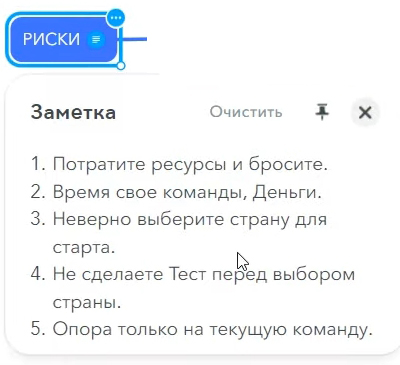
Another serious risk — choosing the wrong country. And here I’ll say something that surprises many: Poland should be crossed off first. Yes, most people think Poland is the logical first step. But based on test results, in 90% of cases it’s not the best choice. It’s worth looking at other markets.
And another common mistake — relying on your current team. Here’s a typical situation. I ask a business owner: “How’s the scaling going?” Answer: “Well, we opened a company in Poland a year ago. Made a couple of sales through acquaintances. We pay an accountant. Had an office — closed it. We’re not physically there. Need to develop, planning…” Everything stopped here. Money and time spent, but cash flow didn’t start. Sound familiar?
5W Block
Now moving to tests. And let’s start with the foundation — five marketing questions known in English-language literature as 5W: What? Who? Why? When? Where?

1. What?
This is about the semantic layer of the website and product card. Imagine: a person visited the page, looked, closed it. What thoughts remained? Did they understand what the product is and why it’s needed?
The main recommendation — if you’re unsure whether to add a characteristic to the data feed, display it in the product card or skip it — add it. From my experience, about 50% of businesses (in any European country) can really fill Merchant Center significantly better, more detailed, more “richly.”
2. Who?
Who is the target audience? We’ll break this down in more detail below using Poland as an example. But at minimum — You should clearly visualize the portrait of the hottest traffic.
Ideally, it’s good to work out three priority portraits. But if that’s difficult — settle on a general one covering about 60% of the market. One clear target audience portrait is the base, with it You can develop.
3. Why?
What’s the point of buying the offered product from You? This is a key question. Ask it within the team, at consultations, planning sessions — regularly. And constantly improve the answer.
What not to do — don’t enter a new market with the position “we’re cheaper.” In this format, You’ll simply lose potential profit. For conditional earnings through turnover at low margin, other project elements must work at five plus.
However, delivery conditions work well here — positive differences from competitors will be a trump card. Warranty conditions — how transparent and clear they are to the buyer. From practice I’ll say: with three strong arguments to the question “Why?” and their visible placement on the website — the conversion layer becomes really powerful. You’ll be able to sell in the upper price segment and the number of sales will remain high compared to competitors. Work on these arguments constantly.
4. When?
“When to buy” is better reformulated as “Why buy now?” The task is to push the client not to postpone the purchase. Think about what information to place on the website so the person doesn’t feel the desire to “come back later.”
5. Where?
The “Where to buy?” block is often forgotten. For an online store the answer seems obvious — “here.” But I advise thinking broader.
Suppose 80% of products You ship with delivery. And the remaining 15–20%? If clients are — for example, cosmetologists, once a month, say on Saturday, organize offline events. Not just a sale, but a full activity: mini-community, experience exchange, invited speakers. Additional value that isn’t necessarily tied to money.
Another idea. Suppose a supplier offers bonuses — a factory visit, plant tour, a couple of free invitations twice a year. Raffle them. And not necessarily by turnover — by delta growth, that is, who grew faster in order count from month to month. You choose the raffle conditions yourself.
Website Localization
I want to emphasize, localization is not translation. Here You don’t send texts to a translation agency in Ukraine and wait for the result. You need a native speaker — a language native. Mandatory.
Not an acquaintance who knows Polish and lives in Ukraine. Not a colleague who studied Italian at university. Exclusively a person who has spoken the necessary language their entire life.
In every country there are freelance platforms. Spend 10 minutes and Google the name of the platform for the needed country. Register, post an order — and for $10–15 a person will proofread the texts.
Life hack for checking quality. Give the task to two or three freelancers. Pay each $10–20. And before sending, intentionally introduce errors into the text. When you get the results — you’ll see who really read carefully and found everything, and who just skimmed the surface. Plus on output you get a proofread text written in living language for the local audience. No clumsy formulations that push people away from the website.
Three Priority Target Audiences
“Our clients in Ukraine are one kind, but there they’re different” — a fair remark. Start with the hottest audience: those who enter branded and model queries in search — people with already formed demand. Describe them in a general portrait. Ideally — three. But at the testing stage one is enough.
Let’s break this down using Poland as an example. There are about 2 million Ukrainians there now. It makes sense to highlight priority groups here. Who has integrated into local society? These could be manicure and pedicure masters, cosmetologists, auto service workers or spare parts buyers. They already work in the country, can become clients and advocates of the “native” brand within professional circles.
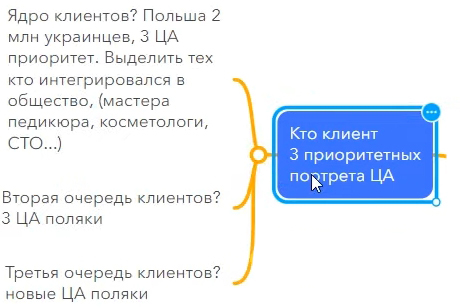
Second and third priority — these are already Polish professionals. Who is more priority depends on Your niche.
Important! At this stage don’t go too deep. The task now is not to write out portraits on 10 pages, but to determine the priority audience for the first test. Outlines for further development (second priority, third) — useful, but dig there later. First — focus on the main thing.
What is Our Product?
The product type determines both the mechanics of Google ad setup and the approach to testing itself. It’s worth figuring this out before launch.
If impulse products up to €30 (conditionally — the price of a burger) are at the core of Your sales, then everything is simple. In 90% of cases people don’t call. They visit the website, fill out a form, pay — and off they go. No additional touchpoints.
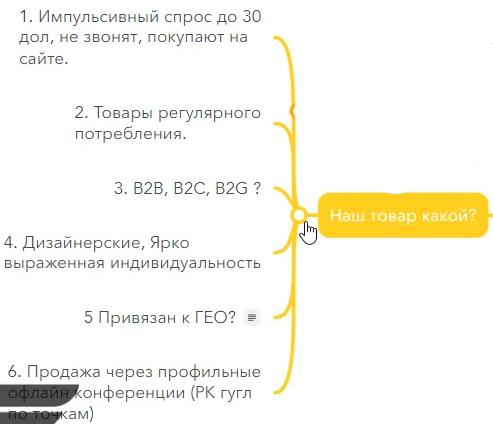
With regular consumption products — the story is different. Here it’s important to consider that customer acquisition cost may pay off with the second-third purchase. For example, pizzerias have long worked like this: the first customer order — at a loss, the second — also, and from the third repeat order the business starts making money. In a similar situation, factor this into calculations at the testing stage.
Next. Main niche — B2B, B2C, B2G (sales to government)? It’s important to determine at the very beginning, as the structure of advertising campaigns and key messages differ for different segments.
Another point — is the product tied to specific geo? It happens that certain categories are in demand in certain regions. This needs to be considered and tests conducted accordingly.
And sometimes, products are bought at professional offline conferences. Suppose You already have people “on the ground” — native speakers, physically present at events, distributing materials. Here the advertising model is different. You need to set up campaigns by points and dates of large conferences (a thousand, five thousand participants), the task of “runners” — to motivate people at events to visit the website. Google Ads specialists should collect these audiences into separate segments.
Local Payment Systems
This point is desirable but not mandatory. Connecting a local payment system opens the opportunity to test Performance Max shopping campaigns.
Nuance: you may need to obtain a license or permit, and this — business registration, accounting and a bunch of accompanying formalities. Expensive and long.
The task at this stage is to test the market, not launch a full-fledged business. If you can’t use a local payment system yet or it doesn’t exist — do without it. You’ll return to it later when the test shows results.
Testing Each Country in Google Ads
So, You’ve prepared the base — answered key questions, figured out the audience and product type. Now moving to the actual test. Suppose You’ve selected three-four-seven European countries for initial verification.
The main rule — don’t spread the budget thin. Allocate an adequate amount for countries. If the cost per click according to Google Planner forecast is around a dollar, then minimum $500 per country. Less — you simply won’t get enough data.
The goal of the test — to understand the cost of a raw lead and the cost of a target lead (preferably across all categories) even before obtaining legal permits and the physical ability to deliver goods to that country.
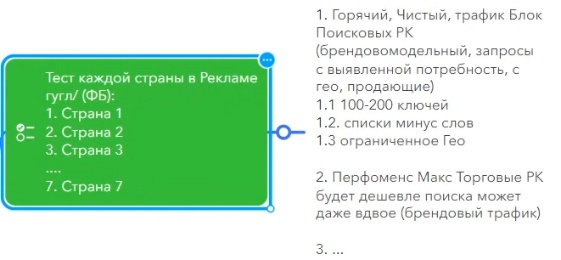
Sounds strange — launch ads when you can’t sell yet? After receiving an application, write to the person honestly: we’re not open yet, but we’ll launch later. Apologize, offer a discount at opening. Ask for feedback. Say: “Follow us, we’ll publish the launch date on the website. Your opinion is important to us — help improve the project.” You’ll collect data and won’t lose first potential customers. Perhaps these 50–100 people will become first buyers when you really enter the country.
The task — to spend the budget as efficiently as possible, on the hottest traffic. And it’s located in Google Search.
With Merchant Center and ability to accept payment — add Performance Max and shopping campaigns. Without Merchant Center — work with search campaigns.
Keyword types for use in search campaigns:
- Brand-model queries.
- Queries with identified demand.
- Queries with specific geo indication.
- Sales queries — questionable. Depend on niche “overheating.” Orient by budget.
Don’t chase quantity. Stop at 50–120 keywords. Upload negative keyword lists from the niche. This way you won’t drain budget on non-target traffic. The whole point — spend money exclusively on hot queries and understand lead cost.
Launch Strategy
Don’t spend $500 in one day. Better launch for 3–4 hours in a large city (with suburbs) or, conversely, in a small city. Limit geo, stretch the budget over a conditional week. This way you can make adjustments along the way and test new hypotheses.
Try to simultaneously launch Performance Max shopping campaigns. Typically, they’re cheaper than search, as part of branded traffic (20–30%) falls into Performance Max, and this noticeably reduces cost. Sometimes — twice as cheap as classic search for hot queries. And in a warmed-up account, Performance Max shopping can bring 40 to 60% of sales.
Attention: depending on the niche, additional test options may differ. Sometimes it makes sense to test competitor queries or launch a small video to the target audience for warming up. Video acquisition cost is often quite low, so a small amount for such a test can give useful data.
“Analysis” Block
Data collected, applications received — now the most interesting part. But the key point of analysis — not the absolute lead cost in countries. The main thing — the ratio between countries.
Suppose you tested seven countries. Look at the numbers and choose those where customer acquisition is cheaper. Yes, the cost may unpleasantly surprise — it turns out a lead costs as much as two markups on the product. Don’t panic. Once a fully working website, a tuned ad account and competent specialists on support appear — lead cost will decrease. Through account learning, through regular weekly optimization work. The task now is different.
Launch 15–20 countries — 10–20% will turn out to be obvious leaders in ease of entry. These are the ones to look at first. Price spread may surprise: in the same niche in Italy and Spain, the price can differ by 4 times.
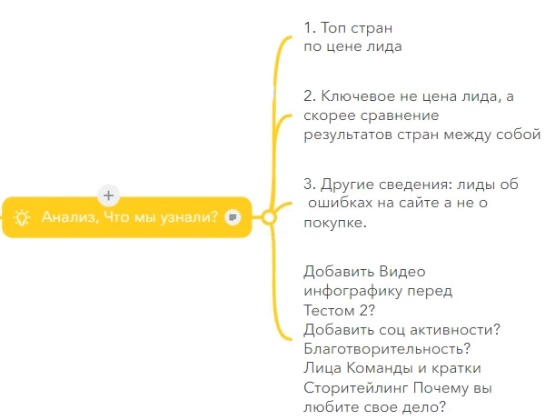
It would seem, Europe — everyone is nearby, mentalities are similar, markets developed roughly the same. Bulgaria or Romania may turn out more interesting than Poland. Or Nordic countries — Norway, Sweden, Finland, Denmark — will show better results. This point is important to consider, don’t bet in advance.
Pay separate attention: are leads — purchase applications or complaints about website errors? Remember localization. There was a real case that was analyzed at a Google conference on the Polish market. The business launched, the website was translated by a regular translation bureau, without localization. In the first 24 hours they received 20 applications. They open them — and Poles write: “Fix the errors on the website. Don’t butcher the language.”
Advice: add the ability to leave a comment in the order form. This way you’ll see what people like and what annoys them.
Right now, without leaving the office in Ukraine, you can create quality video in the target country’s language. The scheme is simple: draw infographics, create video structure, write text in Ukrainian, translate, give to native speaker for proofreading, then they voice it. Overlay the voice — and in 10–15 minutes you have a video tutorial that can really increase website conversion.
Another point — social activity. In European countries this works. Visit competitor websites: many make donations to charitable funds, participate in environmental initiatives, support local projects. Maybe it’s worth adding similar information for You too — a symbolic percentage of future sales to a thematic fund would work. Though, these “perks” strongly depend on the culture and mentality of a specific country.
And think about adding the team face to the website. Especially — the face of a person located in the country of presence. Short storytelling: why You love your work, what motivates. If the niche is pet products, tell what makes this close to You. Personal attachment to the product works better than any advertising slogan.
Second Test Round
Based on the first test results, You’ll choose one-two favorite countries. And you’ll want to conduct a second, detailed test. I highlight it separately for a reason — it’s really important. Every unit of time spent on repeat testing returns tenfold, and sometimes fifty- and hundredfold.
Yes, perhaps You planned to fit into two weeks, but it will take a month and a half. But you’ll have real data — genuine market response, which is worth a lot. And for relatively sane money. You didn’t open an office, didn’t hire staff — everything was done with remote specialists.
By the way, regarding local business you can really go further. Give a task to a person on the ground — walk around points, find out prices, look at competitor assortment. This will give excellent results. Without leaving the office in Ukraine, You can know about the French market no worse than if you were physically there.
If needed — do a second test. Clarifying, already for a specific country: deeper into target audience, categories, hypotheses. Believe me, with the first round the team will definitely have new ideas.
Sales Department — Needed?
You’ve chosen a country. Great. Now the question: is a sales department needed?
If Your product is over $30 — most likely, yes. People will call, not just quietly place an order on the website. The percentage of calls will grow, and someone needs to answer them.

And here’s an important point. It’s better to hire not a person in Ukraine who “knows Polish,” but directly a Pole. And ideally — one who doesn’t know Ukrainian or Russian. Sounds counterintuitive? But believe me, You’ll find a way to convey the essence of tasks. But the client on the other end of the line will hear native speech without accent and strange turns of phrase.
Yes, perhaps the first-second employee will need to be replaced, retrained. This is normal. But this is many times better than trying to make a person from Ukraine who knows Italian but lives here — “go to Italy, launch there, do it.” Such a path doesn’t work. A local person on the ground is needed. Even part-time, even for a few hours a day — but there.
Important! Don’t give in to the temptation to take the easy path: “well, my wife’s brother’s husband knows the language — he’ll help.” This is a bad idea. At minimum, in the business environment everyone who went through this says so. Better think about how to find a local specialist cheaper — through the same freelance platforms, for example.
Competitor Products
After tests it’s worth looking more carefully at the competitive environment. And we’re talking not only about direct competitors. There are also indirect ones — displacement products that compete for the same money in the client’s wallet. And there are hidden competitors that You don’t see directly at all: the person bought something else — and the need for Your product simply disappeared.
This is important to consider. Sometimes a team, digging in this direction, comes up with unexpected strategies for how to get sales at a better price.
What Can We Improve?
Returning to the million-dollar question: “Why buy from us?”
Suppose you’re entering the cosmetology niche. You look at competitors — they have 100 reviews each. You think: need to spend huge resources to gather the same amount. Buy? Not buy?
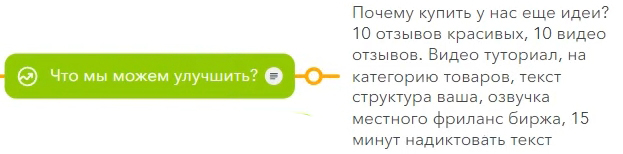
There’s a better path. Focus on 10 reviews. Yes, just ten. But quality ones. From the first 20 clients try to get 10 detailed reviews. By hook or by crook ask people to share their experience. Just not in the format “Everything’s super, 5 stars,” but through answers to specific questions: “What guided you when choosing us? What options did you consider? What task did you have? What result did you get?”
Prepare 8–10 questions for a selling review. On output you’ll get mini-storytelling — a living story with emotions, with understanding who this person is, what worried them and how Your product solved the task. Even if the person mentions some shortcoming, but says “overall everything’s cool, 5 stars” — this is a living, real review. Ten such reviews will work better than a hundred passing ones from competitors.
At the start, competing by quantity is irrational and expensive. Compete by quality.
And another point. All reviews can be gathered from one target audience portrait — that same priority one you determined earlier. When a person from this same audience visits the website and sees reviews “about themselves” — they think: “This is all about me.” Conversion will grow noticeably. Much better than spreading reviews across everyone indiscriminately.
Next step — don’t chase another 90 reviews, but go in a different direction. Ask clients to record short video reviews. Talk with them, think about what could interest them. A dozen such videos — post on YouTube channel and on category or product pages.
And in parallel you can record video tutorials. How to do this inexpensively? Order video infographics — mind map with blocks that change, animated structure. Set the script, ask native speaker to proofread and voice. In a week you get a ready video. Topics? “How to buy from us?”, “Why choose us?”, “What mistakes happen when ordering and how we solve them?” Three-four such videos can seriously raise website conversion.
If unsure what topic to record — choose the one important to Your priority target audience portrait.
Attention: record video without face, without attachment to a specific person. Native speaker from freelance platform provides only voice. No need for clients to get attached to a person who tomorrow may stop working with You. Infographics plus voiceover — that’s it. The trick is relatively inexpensive: hundreds of dollars to create. Not thousands and not tens of thousands on office, team, accounting and logistics.
This, of course, is not an exhaustive list. There are many tricks in every niche. Write in comments if you have ideas — we’ll expand and add. The task of this block is to give a foundation and prompt thoughts on where to start.
Where is the Product Made?
A question worth working through. Local production — is this an advantage or not? Depends on the country and niche.
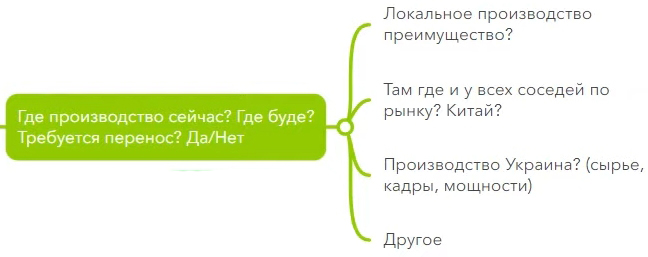
If the product is made where 90% of competitors make it — in China, India, Philippines — then emphasizing this on the website makes no sense. Everyone is in the same boat, no competitive advantage.
But if production is in Ukraine — that’s a different conversation. Think: what exactly stays in Ukraine? Raw materials, personnel, facilities? And how to present this? Now in European countries there’s interest in Ukrainian manufacturers, many have sincere desire to help.
Suppose You make designer wooden furniture. Part of the team is in Poland, main production — in Ukraine. In this case “Made in Ukraine” can well become an advantage. By buying from You, the client also supports Ukraine. If in a specific country this is valued — bring this information to the forefront.
What Helps?
Ideas and options — infinitely many. But there’s one question that really helps not to get stuck at any launch stage. It sounds like this: “Does this next action help conduct the test for this country faster — or prolongs the process?”
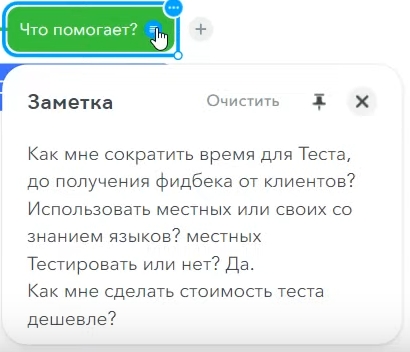
If the team starts drowning in tasks — cut. Three target audience portraits? Leave one. The whole country? Narrow to one city or suburb. Start from a point within a 30 kilometer radius. See that there’s little audience and budget barely spends — expand tomorrow. Add cities, double it — and see what happens.
We’re not talking about money and real sales yet. The task — quickly get a response from the real market, not build forecasts based on “pink ponies.” Experience in Ukraine — this is absolutely not the same experience as in a local country. Don’t transfer one to the other.
Use local specialists or relatives-compatriots with language knowledge for work? Already said — only locals. Think how to make cheaper: part-time, freelance platforms, hourly pay.
Important! The question “to test or not to test” shouldn’t stand at all. The answer is unequivocal — test. The only right question: “How to make this test cheaper?” Reduce audience, leave 5 keywords instead of 50, negative out the rest. Make quality ads. Prepare the website. Spend $200.
Suppose 300 people visited the website — and not a single order. Well, then you definitely need to change something on the website. It can’t be that nothing can be improved. Make changes, launch a second test for another $200 — and already get some more sane lead cost. Break-even is still far away, but You’ve already approached the goal from a hundred steps to fifty. There’s movement.
In total, what we discussed: main project stages, where to start, what risks, what’s minimally necessary for testing, what’s desirable to add, and where to dig further. The list can be expanded — and further it will only grow.
Alternatives
And maybe you don’t need a website at all right now?
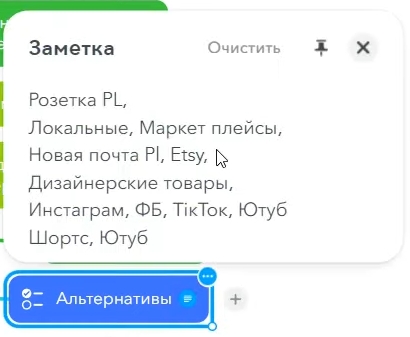
Seriously. Before investing in development, think about alternative channels. Suppose You chose the Polish market. Rozetka has already opened in Poland. Nova Poshta also works there. Why not test demand through a marketplace? Post products on Rozetka or other local platforms — and see what happens.
If you have a designer product — there are even more options. Etsy is great for handmade goods. Instagram, TikTok, Facebook — visual content decides. YouTube Shorts — short videos that can be shot in a day. No website needed at this stage. You want to test — so you need information, not a perfect showcase.
Everything related to conveying product value — why buy from You, what’s the quality, how you’re different — can be packaged in video and text and distributed through these channels. Fast, cheap, with real response.
Summary
Let’s draw a line. We broke down the main stages of entering a new market through Google Ads — from first questions to specific steps for testing. This is a base to build from. But the list isn’t closed — add your ideas, share experience in comments.
By the way, an interesting request came in: record a video on choosing a city in Europe for a local business. The gist is — our relocated people are choosing a new city for life and want to understand where they can immediately launch a small business (conditional balloon delivery, for example) and have basic income. Moved — and already know the business will feed you. If the topic is interesting — write in comments, I’ll put it higher in the recording queue.
Thank you for attention! Subscribe. And thanks for sponsorship. Have a good day and great mood!