Today, we will talk about why Google Merchant Center might actually get suspended and expose the “fake” reasons that Ukrainian blogs have been copying from each other for years, without checking how the system actually works.
Briefly. Google automatically suspends Merchant Center for a combination of risk signals: product feed spikes, trigger brands (Stihl, Dyson, Nike, iPhone), niches (air conditioners, generators, power banks, water filters, novelty gadgets), unsubstantiated medical claims, military-related themes, identical contact info across multiple sites, and creating a new Merchant account on the same domain. You get 3 appeal attempts per MC. Based on ADW Service’s practice (90+ projects), the average number of appeals before a successful reinstatement is 2.
If you have just received a ban labeled “found during automatic review”—there is one thing you need to understand even before you start fixing anything. Half of what is written on the Ukrainian internet as “reasons for suspension” actually does not affect an automatic ban at all. You fix your Terms of Service, add “the best offer in Ukraine,” remove the “Ivan from Kyiv just bought” pop-up, but nothing helps. Because that wasn’t the reason.
This article is about what the automated system actually bans you for. The material is based on our public expertise since March 2021 and our work with over 300 projects, 90+ of which underwent a full audit and were successfully reinstated. Google Merchant Center has been operating in Ukraine since March 1, 2018—meaning we cover about 5 years of accumulated account reinstatement practice in this market.
How Does an Automatic Ban Differ from a Manual Review?
An automatic ban is the work of an algorithm that assesses the risk profile of an advertising account based on dozens of signals and makes a decision before a human even sees your site. A manual review comes into play later—when you submit an appeal, and a live moderator checks if the online store looks real.
- Layer 1 — automatic ban. The system assesses the risk profile using dozens of signals, adds up “points,” and when the sum exceeds the threshold, the store gets suspended with the note “found during review.” There is no human here. Just the algorithm.
- Layer 2 — the decision of a manual moderator who visits the site during an appeal. This is already the subjective opinion of a live person. And what you fix at this stage (contact details, shipping, returns, consistency of terms) matters to the moderator, not the robot.
What is usually described as “reasons for suspension” applies to the manual review in 80% of cases. But the automated system bans for entirely different things—and that is exactly what this article is about.
What Can the Automated System Suspend Google Merchant Center For in 2026?
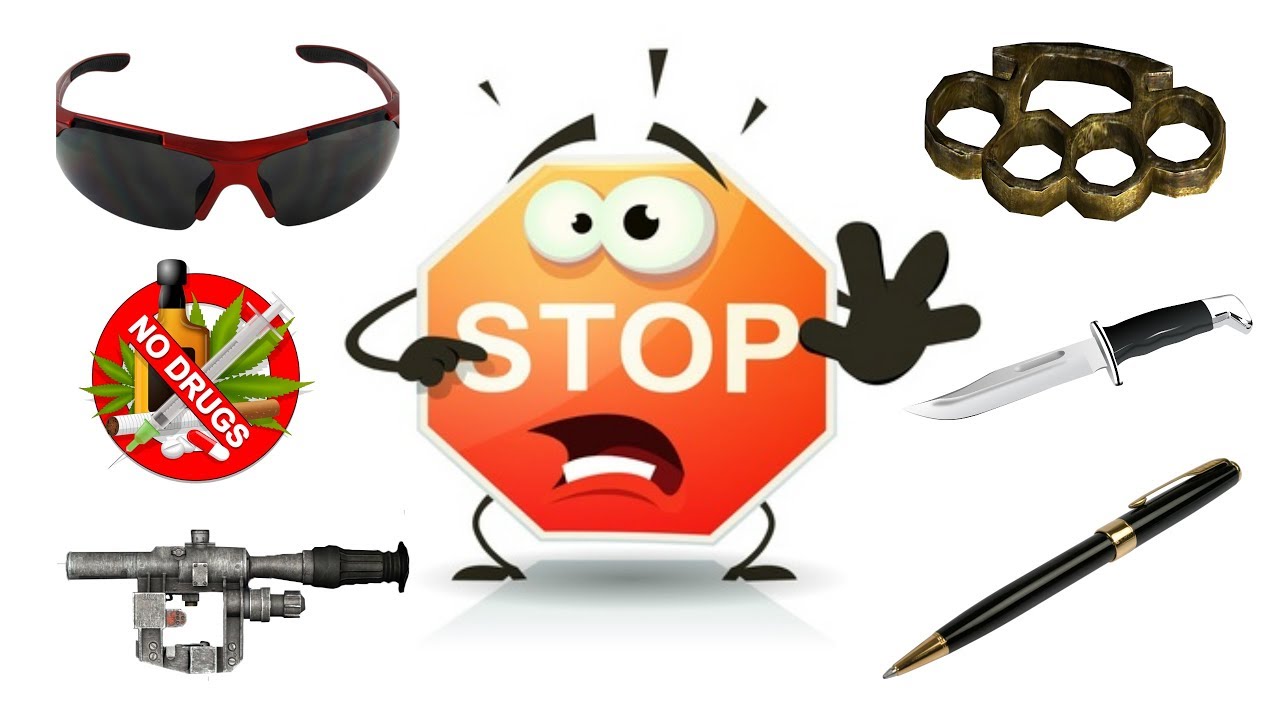
This is not an exhaustive list—every niche may have specific triggers—but these seven cover the vast majority of cases in our experience.
Trigger | What It Means |
Product matrix spikes | Mass uploads and deletions of products, frequent feed reformatting. A stable catalog looks safe, a “breathing” one does not. |
Trigger brands | Stihl, Makita, Dyson, Tefal, Rowenta, Nike, Adidas, Reebok, Victoria’s Secret, iPhone. Google protects copyright holders from unauthorized sellers. |
Trigger niches | Air conditioners, generators and power banks, water and refrigerator filters (USA), novelty gadgets and beauty devices from marketplaces, tires (Poland), dropshipping patterns. |
Unsubstantiated claims | Promises of weight loss, rejuvenation, or cures without evidence. Dietary supplements, reproductive health, and aesthetic medicine devices carry the highest risk. |
Military themes | The niche is packed with scammers. The system deliberately reroutes to mandatory manual review. An automated GMC account suspension here is not a death sentence, but a procedure. |
Identical contact info across multiple sites | The same phone number, email, or address across different Merchant accounts. |
A new GMC on the same domain | The ban is tied to the site through domain verification. If you link another account to the same site, you can end up with two suspended GMCs instead of one. |
How Many Appeals Does It Take to Lift a GMC Account Suspension?
Google allows a maximum of 3 appeal attempts per account—after the third rejection, it is banned permanently. In our experience, the average number of requests before a successful reinstatement is 2. But it depends on the scenario.
Your Scenario | Number of Appeals | Probability of Success |
New domain + new Merchant Center | Usually 1 (max 3 per MC) | Most often succeeds on the first try if the site is well-prepared |
Same domain, previous suspension history | Up to 3 per MC | Typically ends in a final rejection—then starting a new MC from scratch |
Client doesn’t remember how many GMCs they had before | We treat it as “burned”—i.e., up to 3 per MC | We must first piece together the history of this account |
Worst-case scenario: 1st MC gets 3 rejections + 2nd MC gets 1 | 4 submissions total | After that—a permanent ban on both accounts |
Average across all 90+ ADW Service projects | 2 appeals per case | Most stores are unbanned in 1-2 attempts |
These statistics are drawn from ADW Service’s practice. Google does not officially publish the exact limit. But in the vast majority of cases, after the third rejection, appeals on the same MC stop working.
Important! If one Merchant Center is suspended and a second one is created carelessly, it may be banned immediately because Google identifies both as the same organization based on certain information. Creating a new MC without severing ties to the previous one is not a solution, but doubling the problem.
How to Assess the Complexity of Your Case Yourself?
Before submitting an appeal or creating a new account—ask yourself four questions. The answers will show whether you can handle it yourself or if you need a professional audit.
Self-check list:
- How many Merchant Centers have you created on this domain before?
- How many Merchant Centers are on this Google account?
- Did you change your business entity or payment profile?
- Was this domain previously used by another business?
If you have more than 1 affirmative answer and a history of suspensions, the risk increases by an order of magnitude. If you answer “I don’t remember” to anything, it means an audit is already necessary. The advertising platform knows this history, even if you don’t.
Which Niches Most Often Get Their Google Merchant Center Suspended?
Out of our 90+ projects, we have recorded a consistent breakdown by niche. This doesn’t mean these topics are “worse”—it means they fall into the high-risk zone more frequently. The largest share is clothing and footwear, due to brand protection (Nike, Adidas, UGG). The second most frequent is auto/moto, and the third is tools and construction equipment.
Niche | Share | Typical Trigger in the Niche |
Clothing, footwear, fashion | ~18% | Brand protection (Nike, Adidas, UGG) |
Auto / moto / auto parts | ~11% | Auto parts, cross-border specifics |
Tools, construction equipment | ~9% | Brand protection (Stihl, Makita) |
Home, kitchen, decor, tableware | ~8% | Brand protection (Tefal, Rowenta) |
Tech, electronics, gadgets | ~7% | Novelty gadgets, iPhone profile |
Cosmetics, health, beauty devices | ~6% | Unsubstantiated medical claims |
Children’s goods, toys | ~5% | Materials and safety |
Sports, active recreation | ~5% | Sports brands |
Climate control, filters, air conditioners | ~4% | Trigger niche (scam history) |
Dentistry and professional equipment | ~3% | B2B profile, invisible supplier |
Tactical gear | ~3% | Military-related themes |
Specialized (knives, tea, software keys, hot tubs, timber) | ~7% | Various triggers |
Undefined / questionable sites | ~11% | Dropshipping pattern, unidentified business |
This breakdown covers all the markets we work with: Ukraine, USA, UK, EU, Australia, Canada. Regional markets add specific signals (tires in Poland, refrigerator filters in the USA).
What Does Google Check via the Store’s Social Media?
During the manual review stage, the moderator doesn’t stop at the website. They go to the company’s social networks looking for confirmation that the business is real, not just a “shell to pass moderation.” Facebook, YouTube, TikTok, Instagram—all four platforms matter.
- Facebook: Is there a page or not? Is it active? Are there organic customer reviews, complaints, and the business’s response to them?
- YouTube: The channel, posting frequency, real views. A hundred videos uploaded on the same day with zero views is a pattern of a fake. Regular videos and comments are signs of a living brand.
- TikTok: Active posting and communication. They look at this particularly closely for new stores.
- Instagram: Open and active is an advantage. Closed or empty is neutral-to-bad. Scam stores often either don’t have an Instagram or keep it empty.
Separately—Business Profile and the pin on Google Maps. If you claim a physical address but aren’t on the map, that’s another point of distrust.
What does this mean? Preparing your social networks for an appeal is not an “option,” but part of what is actually important. A business without any social activity looks suspicious, even if the site itself is perfect.
What Will GMC Definitely NOT Suspend You For, Despite Common Myths?
Now, let’s be honest about what Ukrainian blogs have been copying from each other for years—and what you shouldn’t fear, because the automated system never bans you for it. Not. Once. I have seen every one of these claims in articles from agencies ranking at the top for Merchant Center suspension queries. And every single one is either a myth or confusion between the layers.
Myth 1: “Don’t use words like ‘the best’, ‘unique’, ‘only here'”
Not true. The automated system does not recognize general marketing phrasing as grounds for suspension. A ban drops for specific unsubstantiated claims—medical promises, guaranteed results. “The best brand” does not equal “a promise to cure.”
Myth 2: “Fake discounts, ‘top seller’ badges, ‘Ivan from Kyiv just bought’ pop-ups”
These are Shopify mechanics aimed at conversion, and Google does not ban for them. A moderator might notice them during a manual review—so remove them during moderation. But this has nothing to do with automated algorithms.
Myth 3: “Non-unique product descriptions”
The reviewing robot does not care that 90% of sellers of seeds, sneakers, or sporting goods write the exact same descriptions. You might only get “hit” for placeholder templates—when system text like “product description should be here” ends up in the description.
Myth 4: “You cannot pass moderation without online payment on the site”
This directly contradicts Google’s guidelines. The documentation requires at least one clear payment method at checkout—and payment upon delivery (Cash on Delivery) is explicitly named as acceptable. Cash on delivery as the sole method is completely valid.
Myth 5: “No Public Terms of Service or User Agreement”
A website will not be automatically banned for lacking a public terms of service contract or a user agreement. These are legal documents for the Ukrainian legal framework, not for the MC suspension system.
Myth 6: “Messengers on the site (Viber, Telegram, WhatsApp) lead to a ban because the moderator doesn’t click them”
During a manual review, the moderator does not click on messengers—so it’s better to have a phone number and email in plain text on the contact page. But this is a matter of convenience, not a blocking algorithm.
Myth 7: “Discrepancy in availability between the site and Merchant Center”
This is a separate status—products are simply disapproved in MC, but this is not an account ban for misrepresentation. They are different mechanisms.
Section summary. If your ban remains, and you spent a week rewriting your Terms of Service, removing the word “best,” and adding online payment—you were treating the wrong layer. The automated system doesn’t react to that. It reacts to the seven triggers above. Pinpointing exactly which one tripped in your case is a separate diagnostic process that a general article cannot replace.
Frequently Asked Questions (FAQ)
-
For a combination of risk factors: product feed spikes, trigger brands (Stihl, Dyson, Nike, iPhone), niches (air conditioners, generators, power banks, filters, gadgets), unsubstantiated medical claims, military themes, identical contact info across multiple web resources, a new GMC on the same domain.
-
In our experience—3 attempts. After the third rejection, the advertising account is permanently banned. The average number of appeals before a successful reinstatement across 90+ ADW Service projects is 2.
-
No. There is no automatic ban for general marketing adjectives. This is a common myth on the Ukrainian internet.
-
These are Shopify mechanics, impacting conversion. During a manual review, a moderator might be concerned—so it’s best to remove them during moderation.
-
No. The ban is tied to the site, not the account. Google identifies both advertising accounts as the same organization.
-
No. Google’s guidelines explicitly name cash on delivery as an acceptable method. Having one clear payment method is sufficient.
-
Out of ADW Service’s 90+ projects, the largest share is clothing and footwear (around 18%), auto/moto (around 11%), tools and construction equipment (around 9%), tech and electronics (around 7%).
-
Yes, during the manual review stage. The moderator looks at Facebook (reviews), YouTube (regular videos and real views), TikTok (activity), Instagram (active presence). The Business Profile and pin on Google Maps are also checked.
-
This is a sign that an audit is necessary. If there is a hidden suspension history in the advertising account, the new account will be banned before the first appeal is even submitted.
Suspect an auto-ban—but don’t know exactly which trigger tripped in your case? ADW Service is a Google Premier Partner. We have public expertise in Merchant Center topics since March 2021. The material is based on work with 300+ advertising accounts, 90+ of which underwent a full audit and successful reinstatement. The data reflects patterns from practice and is not Google’s official position.