
Dnipro is rightly considered one of Ukraine’s key business hubs. Companies from a wide range of sectors operate here, including heavy industry, logistics, IT startups, beauty salons, and private clinics. With such a diverse range of players, simply “having an online presence” is no longer enough. A website that no one sees is essentially a beautiful storefront in a closed alley.
The task here is to be in front of the customer’s eyes when they are ready to buy. Let’s say a resident of Dnipro types “plastic window installation price” or “order water delivery to your home” into Google. They are not just scrolling through their feed out of boredom — they have a specific need right now. If your ad is the first one they see in the search results, the chances of them calling or submitting a request increase dramatically. This is how contextual advertising works in Dnipro — it targets people who are already looking for what you offer.
The AdwService team has been setting up and managing Google Ads campaigns since 2014. During this time, we have been certified by Google, implemented more than 200 projects, and conducted over 1,000 advertising account audits. For businesses in Dnipro, we build a clear system for attracting applications and calls — one where every hryvnia invested is tracked and brings measurable returns, rather than simply “disappearing” into clicks without results.
Why do businesses in Dnipro need contextual advertising?
In terms of internet audience size, Dnipro consistently ranks among the top three or four Ukrainian cities. Every day, thousands of people open Google and search for everything from sushi delivery to special equipment rental. And if your ad is not there for the right query, the click (and with it, the customer) goes to one of your competitors.
That is why contextual advertising services in Dnipro are relevant for virtually any business. They provide:
- Quick start. SEO promotion is a marathon that lasts for months. Context works differently: launch a campaign in the morning, and by lunchtime you’ll already be getting your first calls. For a new store or seasonal promotion, this is often the only way to find customers.
- Advertising hits the mark. You don’t put up flyers on poles hoping that someone will notice them. This is hot traffic — people have already decided what they need and are choosing who to order from.
- A budget for any task. You don’t have to invest hundreds of thousands. It’s enough to start with 5,000–10,000 UAH per month, test the demand, and then increase the budget as orders grow. You pay for real clicks, not just for your ad to appear on someone’s screen.
- Everything is calculated down to the penny. Google Ads records all user actions: clicks, calls, form submissions. You know exactly how much each lead costs and can reallocate your budget to areas with higher returns at any time.
Important point: contextual advertising works best where demand has already been established. If people are looking for what you sell, all you have to do is be in front of them at the right moment.
What problems does contextual advertising setup in Dnipro solve?
When a business owner comes to us for contextual advertising setup in Dnipro, they usually need to solve a specific problem: boost sales, fill up the schedule for March, or beat a competitor who has been at the top of search results for six months. Tasks can vary greatly depending on the niche and current state of affairs. Below, we describe the most common ones.
Attracting new customers (search advertising)
A classic scenario. Let’s say you’ve opened a dental clinic in Dnipro or launched a new product line. Organic search results aren’t generating traffic yet, but you need customers today.
Search advertising on Google solves this problem: your ad is seen by people who are currently typing in “dental implants Dnipro” or “buy a gas boiler with installation.” They have already decided what they need and are choosing who to contact — all that remains is to offer them a compelling option.
Bringing back those who left without buying (remarketing)
Imagine: a person visited an online store, looked at three vacuum cleaner models, added one to their cart, and closed the tab. Maybe they got distracted, maybe they decided to think about it. Without remarketing, you lose them forever.
But then, that same vacuum cleaner “catches up” with the buyer with a banner ad while they are reading the news or watching videos on YouTube. That’s how remarketing works. Often, such an unobtrusive reminder becomes the final push to place an order.
Promotion of an online store (Google Shopping)
For eCommerce projects, we usually set up Google Shopping. These are product cards that appear directly in search engine results: with a photo, price, and store name. The user has not yet gone to the website, but can already see what the product looks like and how much it costs.
When you search for “Nike Air Max sneakers,” Google will show you a bunch of cards with specific models from different stores—and you’ll click on the one with the price and photo that catch your eye. The conversion rate for such ads is usually significantly higher than for regular text ads — people come to the site already prepared: they have seen the product, the price, and have essentially made their decision before even clicking.
Enhancing brand recognition (CMS)
Not every customer starts with a search. Sometimes you need to introduce your audience to your brand before they even think about making a purchase. That’s where media advertising on Google’s contextual media network comes in — it covers thousands of Ukrainian websites, apps, and YouTube.
These campaigns operate at the top of the funnel: they do not sell directly, but rather build brand awareness, which is then converted into search queries and direct traffic.
Competition for “other people’s” customers
Not all business owners know that Google Ads allows them to show ads for their competitors’ brand queries. It sounds bold, but it’s a completely legal tactic. This technique is especially effective when there is a specific advantage behind the offer. Maybe you deliver faster. Maybe you have a wider range of products. The main thing is not just to grab attention, but to give people a compelling reason to switch.
Imagine: you have a water delivery service. A potential customer goes to Google and types in the name of a “rival” company. But next to the usual result, they notice your ad: free delivery on the day of order, 15% lower price, first bottle free. The person came for your competitor, but leaves with you because they saw a real benefit.
Getting maximum reach (Performance Max)
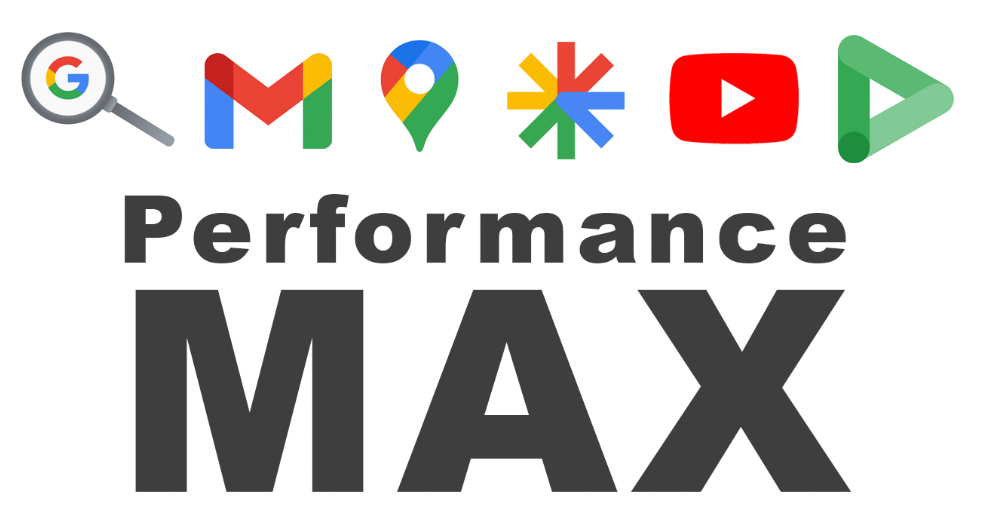
PMax is a type of campaign that brings all of Google’s advertising channels together into a single system. Search, Display Network, YouTube, Gmail, Google Maps, Discovery — previously, you had to create a separate campaign for each channel, set up targeting, and manually allocate your budget.
With Performance Max, the approach is different: you provide the system with a set of materials—texts, images, videos—and specify who you want to attract and what action you expect (application, call, purchase). Google’s machine learning algorithms take control and distribute impressions, trying to squeeze the maximum number of targeted actions out of your budget.
For online stores, PMax has effectively become the number one tool, replacing “smart” marketing campaigns. The system itself promotes product feeds across all channels and finds buyers at every stage of the funnel. One person will see the product for the first time in a YouTube video, another will receive a reminder about the viewed product in Gmail, and a third will click on the card in the search results and be ready to place an order. All these touches work together to push the user towards a purchase.
An important nuance! PMax is a powerful tool, but without proper configuration, it can work against you. If the structure of object groups is chaotic, creatives are weak, and audience signals are inaccurate, the algorithm will start spending your budget on people who will never buy from you. For example, a premium furniture store may receive clicks from users looking for cheap stools. The reason is simple: the campaign did not receive sufficiently accurate “cues.”
Who needs contextual advertising services in Dnipro?
The short answer is: practically any business that has customers on the internet. But to avoid making empty claims, let’s look at specific scenarios where setting up contextual advertising in Dnipro yields the greatest return:
- Local services. Dentistry in Pobeda, car service on the Left Bank, a cleaning company serving the entire city — all these businesses have one thing in common: their customers live and work in Dnipro or the surrounding suburbs. Contextual advertising for them is set up with precise geotargeting — you show ads only to residents of the desired area or city, and don’t waste money on clicks from Lviv or Odessa, where no one will come to you anyway.
- Online stores. Let’s say you sell household appliances with delivery throughout Ukraine, but you notice that competitors are intercepting orders in Dnipro. The solution is to create a separate campaign specifically for the local audience: adapt the ad texts (“delivery in Dnipro within 2 hours”), add local extensions, and adjust bids for the region. This way, you strengthen your position in the “home” market without affecting nationwide campaigns.
- B2B sector. Industrial equipment suppliers, logistics companies, and metal structure manufacturers are familiar niches for Dnipro. And here, the context pays off especially quickly: the average check for a single transaction can be hundreds of thousands of hryvnia, and buyers purposefully search for suppliers through Google. One high-quality lead from a search can pay off a month’s advertising budget.
- Seasonal business. Installing air conditioners in May, selling heaters in October, gift sets before New Year’s Eve — in all these cases, demand appears sharply and disappears just as quickly. Contextual advertising services are ideal for this model: you launch campaigns at the beginning of the season, collect applications at the peak of demand, and when the wave subsides, you simply pause your advertising and don’t spend a penny until the next surge.
Why is it better to order contextual advertising setup in Dnipro from AdwService?

There are plenty of agencies and freelancers in Ukraine who offer Google Ads setup services. The range of prices, approaches, and levels of expertise is enormous. Some will “set up your ads in an evening,” while others will offer a template solution without delving into your business. We work differently — and here’s how our approach differs in practice.
- Predict results before you even click. Before you spend a single penny, we analyze your niche, competitors, and search demand, then show you specific figures: how many clicks, calls, and requests you can expect with your budget.
- The full arsenal of Google Ads tools. Many contractors only know how to work with search advertising. We use the entire suite: search, display, YouTube, Google Shopping, classic and dynamic remarketing, Performance Max. For each client, we select a combination that solves their specific task.
- Certified Google Partner. This status is not just a badge on our website. It means that our specialists regularly pass Google exams, work according to standards approved by the platform, and have access to advanced technical support. In practice, this means, for example, that we can resolve ad moderation issues more quickly or get early access to new features in the advertising account.
- Analytics with no blind spots. We don’t just launch ads and send you a report with pretty graphs. We build a system where every dollar spent is tied to a specific result — a call, an application, a purchase. You always know: this is how much we spent, this is how many leads we got, this is how much one customer costs. This means you can clearly manage your profitability — and we help you improve these figures from month to month.
What is the cost of contextual advertising in Dnipro?
One of the first questions entrepreneurs ask is, “How much will it cost?” To answer honestly, you need to divide the costs into two parts: the advertising budget and the cost of agency services. These are different items, and you shouldn’t confuse them.
Advertising budget
This is the money you pay directly to Google for clicks on your ads. The amount depends on the niche and the level of competition in it. For example, a click on the query “food delivery Dnipro” may cost 3–5 UAH, but “plastic windows Dnipro” may cost 30–50 UAH or more, because dozens of companies are competing for each click.
As a reference point, local businesses (beauty salons, car washes, appliance repair shops) typically start with a budget of 8,000–20,000 UAH per month. Online stores usually need at least 15,000 UAH to generate sufficient traffic and provide Google’s algorithms with data for optimization.
Cost of agency services
This is payment for setting up, managing, and optimizing campaigns. There is no single price here because the amount of work varies from project to project. It is one thing to launch three search campaigns for a law firm, and quite another to build a system of shopping ads, remarketing, and Performance Max for an online store with thousands of items. We can calculate the price of contextual advertising in Dnipro individually after studying your niche, competitors, and current situation.
Tip! To save money and stress, don’t choose a contractor just because they quoted the lowest price for setup. Cheap work without proper analytics, without semantic analysis, and without regular optimization is not a saving, but a direct loss. When communicating with an agency, don’t ask “how much does setup cost,” but rather “how much will one lead cost and what will you do to reduce this figure every month.” This is how those who really count their money phrase the question.
What is included in AdwService’s contextual advertising services?
Once you have decided to order contextual advertising in Dnipro, our specialists will develop a whole chain of steps, each of which directly affects the final result. It includes:
- Audit and immersion in the business. We don’t rush to write ad texts on the first day. First, we figure out who your audience is, how you differ from your competitors, and what people who need your product are searching for on Google. If you already have an advertising account, we analyze it according to 21 parameters — from campaign structure and keyword quality to the correctness of conversion settings.
- Semantic core collection. A PPC specialist compiles a complete list of search phrases that customers might use to find your product or service. But the flip side is just as important—negative keywords. Without working through them, some of your clicks will always be irrelevant.
- Creating and launching campaigns. Based on the collected semantics, a logical structure is built: campaigns are divided into areas, and within each area there are groups of ads with separate texts for each group. We do not use template phrases for all occasions. For each direction, we prepare our own headlines, descriptions, and extensions — additional links to important pages on the site, clarifications of your advantages, and a phone number.
- Analytics setup. Many contractors either skip this step or do it superficially, turning advertising into a “black box” where it is unclear where the requests are coming from. We connect Google Analytics and set goals for each important action on the website: submitting a form, clicking the “Call” button, switching to Viber or Telegram. If necessary, we set up call tracking to monitor calls. In the system, you will see specific results: one campaign brought in 40 requests at 120 UAH each, while another spent 5,000 UAH and resulted in only two calls. Budget decisions are made based on numbers, not feelings.
- Monthly optimization and reporting. Launching is not the end point, but rather the beginning of the main work. Every month, we analyze the accumulated statistics, test new ad options through A/B testing, review bids, expand the list of negative keywords, and disable key phrases that waste your budget without return. You receive a clear report without unnecessary fluff — not a 20-page PDF with decorative graphs, but a specific summary: how much was spent, how many applications were received, what is the cost per lead, and what we plan to improve next month.