
The abbreviation B2B stands for “business-to-business” — a model of interaction where both parties to the transaction are represented by companies or individual entrepreneurs, rather than end consumers.
Many companies in the B2B sector still rely on traditional methods of attracting customers: they call their contact databases and send commercial offers to a cold audience. There is a common misconception that digital tools are only effective for retail sales. But this is fundamentally wrong.
Investments in advertising campaigns for corporate clients usually exceed the budgets of B2C projects, and the path to a deal takes longer. But here, different math applies: even a single successful deal can cover all marketing expenses for several months ahead. Does setting up contextual advertising for B2B require a special approach? Absolutely. But that’s no reason to give up on such a powerful tool for attracting customers.
Features of contextual advertising for the B2B segment
- A PPC specialist needs to thoroughly understand the specifics of the client’s business. In the consumer sector, it is also important to analyze the market, study competitive advantages, and form a strategy before launching campaigns. But corporate products are often so specific that they are difficult to explain in accessible language. Imagine the task: writing a clear advertisement about production automation systems, laboratory equipment for pharmaceutical companies, or cloud solutions for logistics. Without immersing yourself in the subject, it is impossible to do this.
- Low-frequency search queries. Corporate solutions are only sought by company executives, department heads, or narrow-profile experts. They use professional terminology that is unfamiliar to the general public. For example, instead of “accounting software,” a specialist will enter “ERP system with WMS module.” The more specific the product, the more difficult it is to guess what exact wording potential buyers will use in their search.
- The transaction cycle can take months. Corporate clients rarely make impulsive decisions. They need to study the offer, compare it with competitors, discuss it within the company, and conduct a tender. Contextual advertising is just one link in a long chain of interactions. For example, it can take six months or even longer from the first click on an ad to the signing of a contract for the supply of industrial equipment.
- It is difficult to reach decision-makers. In corporations, there is a division of roles: one employee searches for information about the product, another approves the budget, and the final decision is made by the CEO. Your ad will be seen by a purchasing department specialist, but the contract will be signed by someone who has never seen your ad. That’s why it’s important to create materials that are easy to convey to management—presentations, commercial proposals, comparative tables.
- Reputation matters more than price. Corporate clients are willing to pay more for reliability and expertise. When a potential buyer visits a website, they evaluate not only the product, but also the company as a whole. Publish case studies of completed projects, reviews from well-known clients, certificates, and awards. Maintain a corporate blog with useful content—this will demonstrate your expertise and help you gain trust even before the first call.
- Attracting customers is expensive. High click costs, low conversion rates, and a long path to a deal make attracting corporate customers a costly endeavor. In addition, it is difficult to separate corporate requests from retail customers. A company that sells office furniture wholesale is forced to show ads for “buy an office chair,” even though most of the people searching are regular retail buyers. You have to pay for a lot of non-targeted clicks to find one wholesale customer.
- Not all products can be advertised through search engines. Some corporate solutions are so new or specialized that no one is searching for them. Examples include innovative production process monitoring systems or unique staff training methods. If potential customers are unaware of your product’s existence, they will not search for it, and you will need to utilize other promotional channels.
- Results do not come immediately. Customers of contextual advertising for the B2B segment need to be patient—the first deals may appear several months after the start of the campaign. Many companies turn off advertising too early, without waiting for results. It is important to discuss realistic deadlines and metrics for evaluating effectiveness at each stage of the sales funnel with the client in advance.
What contextual advertising tools are suitable for the B2B market?
The corporate sector requires a special approach to choosing advertising tools. Not all formats that work well in the consumer sector will be equally effective when selling to businesses. Let’s take a look at which contextual advertising tools in the B2B market really deliver results and why they work better than others.
Search advertising
Imagine a purchasing manager who urgently needs a supplier of industrial pumps. Or an IT director looking for a server monitoring system. They open a search engine with a specific task in mind—to find a solution to their problem. They don’t have time to look at banners on news sites or scroll through social media.
Corporate buyers come to the search with a clear intention: they need a supplier here and now. Preferably during business hours, when they can immediately dial the number, discuss the details, and request a commercial offer. Or at least leave a request and receive a callback within an hour.
These customers already know what they need. They have gone through the stage of recognizing the problem, studied the options for solving it, and are ready to choose a supplier. This is the most “hot” audience you can find on the internet. Search advertising catches them at the moment of maximum readiness to buy.
Advertising on competitors’ brands
Imagine this situation: a potential customer already knows about your competitor and is specifically searching for them in a search engine. At this point, you can offer an alternative — show your ad in response to a query containing the name of the competing company.
Yes, this type of advertising will cost more. Search engines understand that your ad is less relevant to a query involving someone else’s brand, so they raise the price per click. But it’s often worth it, especially if you offer clear advantages: lower prices, fast delivery, extended warranty.
Even if a user does not click on your ad, they will see your company name and your offer. For young companies, this is a great way to make a name for themselves in the market. You literally capture the attention of an audience that is already interested in the product.
Performance Max
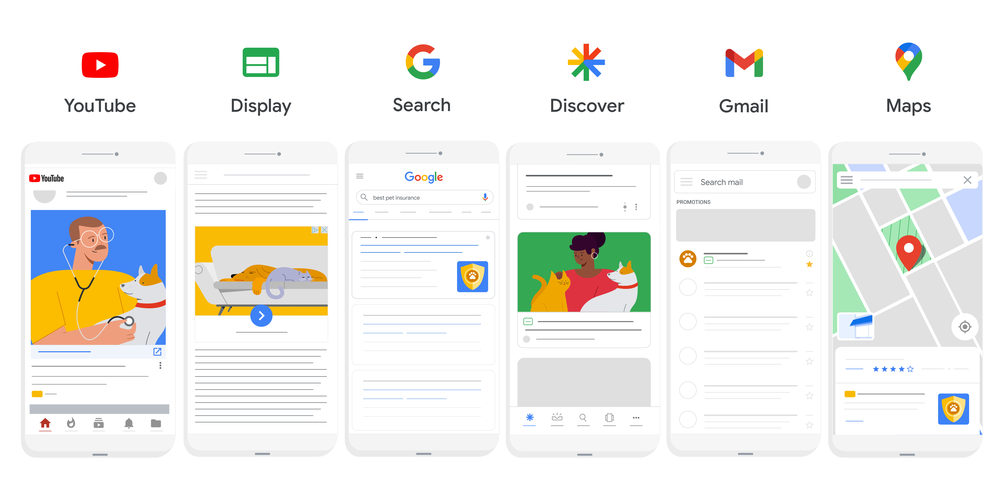
This is a universal campaign format that combines all Google advertising platforms in one tool. Your ads appear in search results, on partner sites, on YouTube, in Gmail, on maps — wherever the system finds your target audience.
At the outset, such campaigns require patience. Algorithms need time to study the audience, understand which platforms work best, and when to show ads. But then Performance Max can significantly increase your reach and bring in customers from places you didn’t expect. For example, your potential buyer may see a video ad for machine tools on YouTube and then find your website in a search a week later.
Important note: Performance Max works better with physical goods than with services. If you supply building materials, sell industrial equipment, or wholesale office equipment, be sure to test this tool. It will be less effective for consulting or custom software development.
Remarketing
In B2B sales, decisions take months to make. Someone visited your website, browsed your catalog, downloaded your price list… and disappeared for three months. They haven’t forgotten about you — they’ve just postponed the decision until the next quarter or are waiting for budget approval. Remarketing will help you stay in their field of vision during this time.
Set up banner ads for people who have already visited your site. But do it carefully: limit the frequency to 3-5 times a week and update the creatives regularly. Nobody wants to see the same image 20 times a day.
Remarketing works especially well with existing customers. Upload a database of your customers’ email addresses or phone numbers to your advertising account. When they need supplies again or it’s time to upgrade their equipment, contextual advertising will remind them who to turn to.
When it comes to designing banners for B2B, forget about creative flourishes. Corporate clients don’t need flashy slogans and abstract images. Show the product, add the company logo, and highlight the key advantage. Your task is not to surprise, but to remind them of yourself at the right moment.
Is advertising on KMS effective?
Whether to use contextual media networks for promotion in the B2B sector is a controversial issue. Imagine: a month ago, a buyer was looking for rolled metal suppliers, has already chosen a contractor, and signed a contract. But banners with offers continue to follow him around on news sites. The train has left the station, but the advertising doesn’t know it.
Another problem is the viewing context. In the evening, people read sports news or watch videos with cats. At that moment, they are not thinking about work tasks and are likely to ignore your offer of industrial filters.
KMS does not work well with narrow B2B audiences. The system simply cannot accurately determine who is in front of it — the owner of a construction company or an ordinary person who accidentally stumbled upon a website about building materials.
But there are exceptions. KMS can attract micro-conversions — small actions that show interest. Offer to download useful material: a calendar of industry exhibitions, a checklist for choosing equipment, a comparative table of suppliers. This will allow you to collect contacts of potential customers for further work.
Tips for setting up contextual advertising in the B2B sector
Every corporate project is unique, and there is no universal recipe for setting up contextual advertising for B2B. But there are proven principles that will help you avoid typical mistakes and save your advertising budget.
Use all relevant keywords
In the corporate sector, keywords are rarely searched for, simply because there are few searchers. How many companies in your city purchase industrial compressors? And how many people search for smartphones every day? The difference is obvious.
Your first task is to find those rare queries that people use to search for your specific product. But these will not be enough for a full-fledged advertising campaign. Therefore, expand your reach by using related and informational queries.
Let’s imagine that you supply video surveillance systems for businesses. Here’s what your semantic core might look like:
- “Buy IP cameras for the office” — a direct commercial query, maximum willingness to buy;
- Hikvision DS-2CD2143G0-IS — search for a specific equipment model;
- “How to calculate the number of cameras for a warehouse” — an information request from a person planning a purchase;
- “Video surveillance software” is a related topic that your customers are interested in.
Don’t forget about branded queries. Be sure to run ads using your company name — don’t give this traffic away to your competitors. Conversely, use the names of competing companies to lure away their potential customers.
Remember: every click in B2B is expensive. One incorrectly selected query can waste 20-30% of your budget.
Pay attention to negative phrases
Imagine: You sell office furniture wholesale, in batches of 50 units. But when someone searches for “buy an office desk,” hundreds of people who need a single desk for their home office come to your site. Every one of those clicks is money down the drain.
When setting up contextual advertising in the B2B sector, negative keywords are your shield against untargeted traffic. Start with the obvious ones:
- “do it yourself,” “independently,” “drawing” — sought by those who want to do it themselves;
- “used,” “second-hand,” “from private seller” — You are selling new equipment;
- “repair,” “fix,” “broken” — these are not your customers, unless you are a service center;
- “courses,” “training,” “vacancy” — they are looking for information, not goods;
- “download,” “torrent,” “free” — comments are unnecessary.
After launching the campaign, open the search query report every week. You will be surprised at the strange phrases that contextual advertising shows up for. If you find an irrelevant query, immediately add it to your negative keywords list.
Real-life example: a company sells industrial scales. They launched an ad campaign targeting the search query “scales for warehouses.” It turned out that half of the budget was spent on queries such as “scales for warehouses pictures” and “scales for warehouses essay.” They added the negative keywords “pictures,” “abstract,” and “presentation” — and conversion doubled with the same budget.
Highlight separate groups of ads for each target audience segment.
Corporate procurement rarely involves just one person. Usually, it involves a whole chain of employees, each with their own role:
- A procurement department specialist collects information about suppliers and prepares a comparative table for management;
- The CFO evaluates the budget and payment terms;
- A technical specialist checks the specifications and compatibility with existing systems;
- The CEO makes the final decision.
Each participant in the process has their own tasks and concerns. The buyer is afraid of missing out on a good deal. The technical specialist worries that the equipment will not be suitable. The director thinks about the reputational risks of choosing an unreliable supplier.
It is important to create separate ad groups for each role. Test different headlines, texts, and calls to action. Ideally, direct them to different landing pages tailored to a specific audience.
Show different messages at different stages of product discovery. For those who are just starting to look for a solution, offer educational content: “How to reduce logistics costs by 30%.” This will draw attention to the problem you are solving.
For those who are already exploring options, highlight specific benefits: “Automate warehouse accounting in two weeks.” For those who are ready to buy, provide a clear commercial offer with prices and terms.
Use a pay-per-conversion model
In B2B, every visitor is worth their weight in gold. You don’t need thousands of clicks from random people — you need dozens of inquiries from real buyers. So forget about paying for clicks and switch to paying for results.
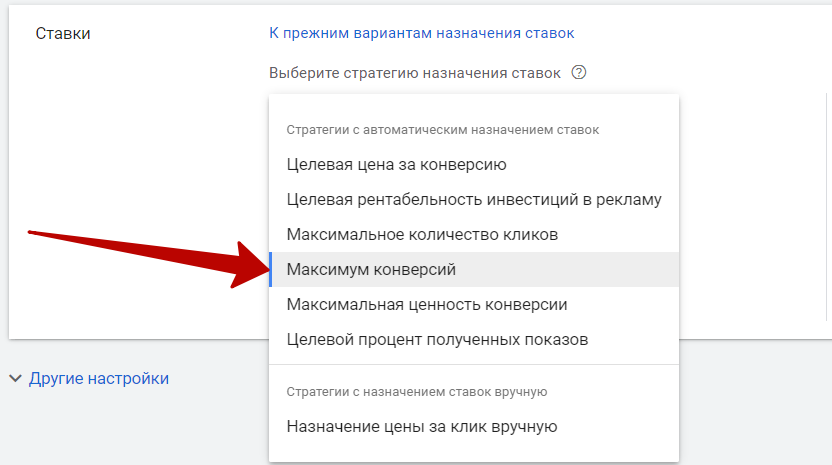
In Google Ads, select the “Maximize conversions” strategy. The system will automatically search for users who are more likely to submit a request or call. Yes, the algorithm will need time to learn — usually 2-3 weeks. But then the quality of traffic will increase significantly.
Before launching auto-strategies, prepare the technical base. To do this:
- Install Google Analytics on all pages of your website. Without analytics, you’re flying blind.
- Set up goals in analytics. What counts as a conversion? Submitting an application form, calling from the website, downloading a price list, signing up for a demo — track all important actions.
- Link Analytics to your advertising account. Otherwise, the system will not recognize your conversions and will not be able to optimize impressions.
- Enable call tracking. In B2B, many prefer to call rather than fill out forms. Without call tracking, you will lose half of your conversion data. Call tracking will show you which ads generate calls and which ones just waste your budget.
Remember: for auto-strategies to work correctly, you need at least 15-20 conversions per month. If you have fewer than that, expand your ad geography or add micro-conversions — for example, viewing a page with prices or spending more than 3 minutes on the site.
Don’t ignore micro-conversions
Google’s automated strategies require data for training — at least 10 conversions per week. But in B2B, requests are rare. A company may receive 2-3 inquiries per week, which is not enough for the algorithms to work correctly.
The solution is to track micro-conversions. These are intermediate actions that show visitor interest. The person is not yet ready to buy, but is already showing interest in your offer.
What can be a micro-conversion:
- Downloading a price list or product catalog;
- Viewing the page with delivery terms;
- Click on the “Write to WhatsApp” button;
- Time spent on the website exceeds 5 minutes;
- Viewing more than 3 pages per visit;
- Go to the “Contacts” page;
- Watch the product video until the end.
Start by recording all significant actions on the website. Analyze the behavior of those who ultimately submitted an application. Which pages did they visit? How much time did they spend on the website? Which documents did they download?
For example, you sell CNC machines. Analysis has shown that 80% of buyers first downloaded technical documentation. This means that downloading a PDF with specifications is an excellent micro-conversion for optimization.
Gradually, you will determine which micro-conversions best predict future purchases. Keep the 3-4 most effective ones and optimize your advertising campaigns based on them.
Work on the text of the ads
Forget about emotional appeals from contextual advertising for B2C. Corporate buyers make rational decisions. They need facts, figures, and specific terms of cooperation.
Bad calls to action for B2B:
- “Hurry up and buy at a discount!”
- “Order now!”
- “The lowest prices!”
Good calls to action:
- “Request Specification”
- “Get a commercial offer”
- “Discuss delivery terms”
- “Sign up for a demonstration”
A phone number in the ad text is a must-have for B2B. Complex products require discussion. Buyers want to know that they can call and get answers to technical questions.
Also, be sure to include a mention of after-sales service in your ad—this is often even more important than price. Add the following to your ad:
- “3-year warranty”
- “24/7 technical support”
- “Staff training included”
- “Spare parts warehouse in your region”
Important! Don’t talk about how great your product is. Show how it solves a specific problem for the customer. Remember: the customer isn’t buying a drill, but holes in the wall. Not software, but process automation. Not consulting, but problem solving. Build your communication around the result that the customer will get.
Use extensions and add-ons
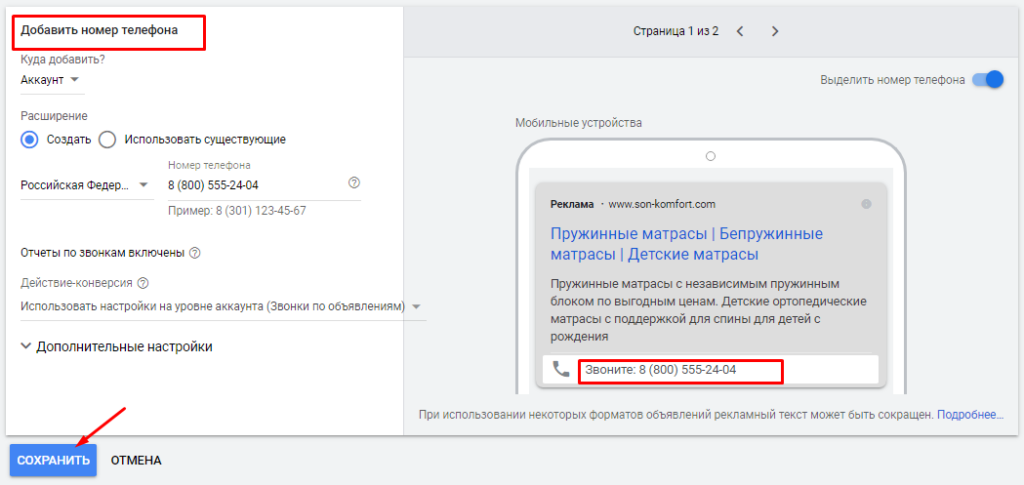
Managers and procurement specialists value their time. They won’t wander around your website looking for the information they need. One extra click, and a potential customer will go to your competitors.
Use ad extensions to bring key information directly to search results. Add quick links to:
- Product catalog;
- Payment and delivery terms;
- Workflow diagram;
- Portfolio of completed projects;
- Quick application form.
When choosing text for links, think about the action rather than the section name. Instead of “Contact Information,” write “Contact a Manager.” Instead of “About Us,” write “See Our Projects.” This is especially important for mobile devices: a “Call Now” button works much better than a plain “Contacts” link.
Also add clarifications — these are short texts below the main ad. Use them to build trust:
- ✓ We work with VAT;
- ✓ 60-day payment deferral;
- ✓ Delivery throughout Ukraine;
- ✓ 15 years on the market.
It is better not to specify the price in the advertisement.
In B2B, fixed prices are rare. The cost of a ventilation system depends on the size of the premises. The price of a batch of components depends on the volume of the order. Software development is calculated individually for each client’s tasks.
By specifying a specific amount, you will either scare the customer away (“too expensive”) or create false expectations (“why did it end up being more expensive?”). For example, your equipment is more expensive than similar products, but lasts three times longer. Seeing the high price in the ad, the customer will not learn about the long-term benefits.
What should you write instead of the price? Demonstrate value in other ways:
- “We will calculate the cost in 30 minutes.”
- “Flexible payment terms”
- “Special offers for wholesalers”
- “Customized calculation for your project”
Be sure to include your phone number directly in the ad text. Let the customer talk to the manager first, learn about the benefits, and get answers to their questions. An experienced salesperson will be able to justify the cost and demonstrate the benefits of cooperation.