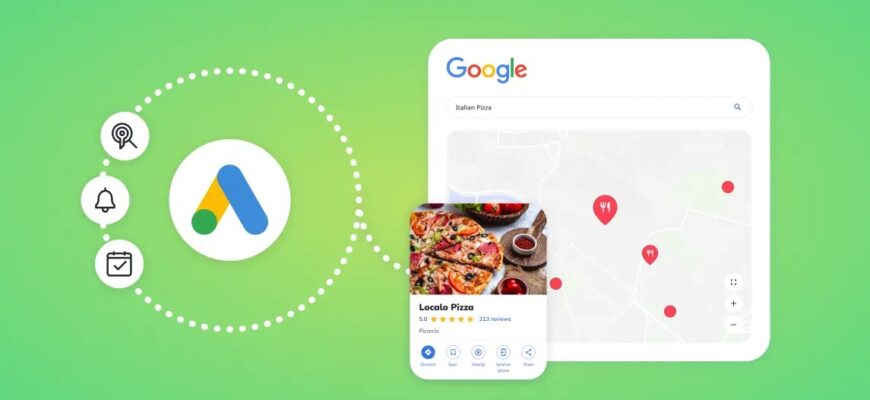
Imagine: a person is walking down the street and searching for “coffee shop nearby” on their phone. At this moment, the fate of your establishment is decided—will they see you in the search results or walk past to your competitors? For a small bakery in a residential area, a barbershop on the ground floor, or a dental office in a business center, contextual advertising for local businesses works like a magnet, attracting customers just when they are ready to buy.
But there is an important nuance here: promoting a local hair salon is radically different from promoting a large marketplace. Local businesses operate on the principle of “I need it right now and nearby” — someone with a severe toothache won’t travel across town, even if you offer a 50% discount.
That’s why standard advertising campaign setup strategies simply don’t work here. Let’s take a look at which tools can help local businesses become the first choice for customers in their area and which mistakes can wipe out your entire advertising budget.
What is local contextual advertising?
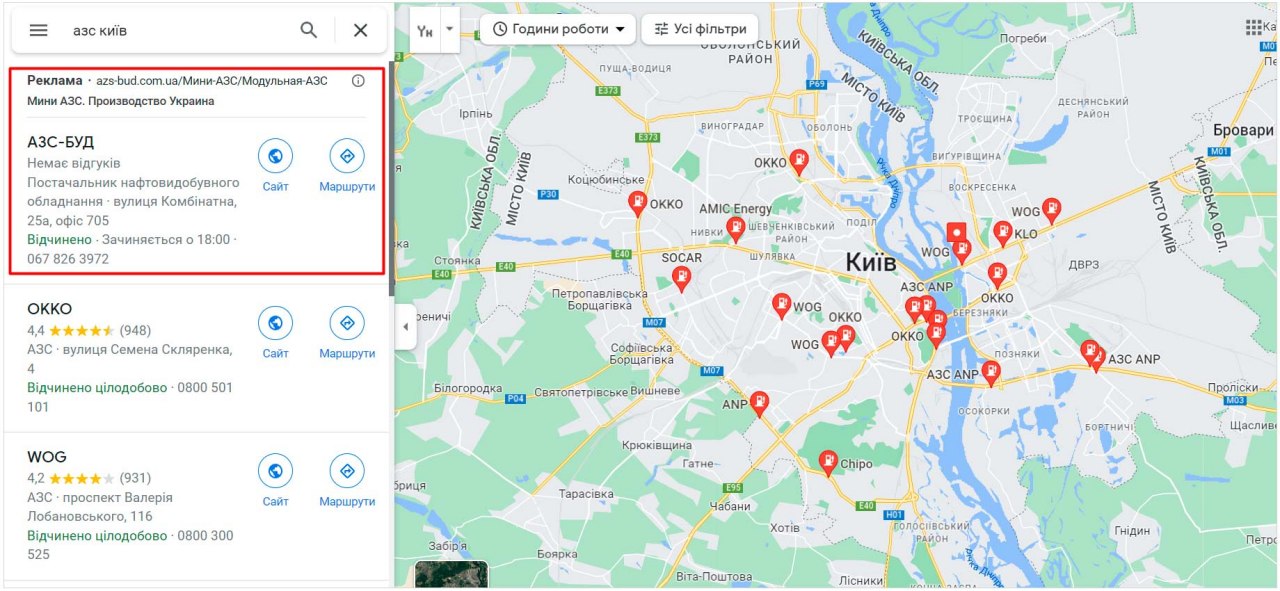
Local contextual advertising is paid advertising that is only seen by users in the desired area, city, or even on a specific street. You pay for each click (PPC model), but the links are clicked by people who can physically reach your establishment in a few minutes. Set up targeting for 3 kilometers around the beauty salon, and now the ad is only visible to residents of neighboring neighborhoods.
Here’s a typical situation: a girl breaks her heel on her way to work. She takes out her phone and types in “urgent shoe repair nearby.” At that moment, your workshop, located two blocks away, appears at the top of the search results. Five minutes later, the customer is already at your doorstep.
Local contextual advertising catches people at a moment of acute need—when they need pizza delivered within half an hour, emergency veterinary care, or a spot at the car repair shop today. The main task is to appear on the smartphone screen just when a person is ready to act immediately: call, order, come. No long sales funnels — just instant conversion into a real visitor.
For which businesses is local advertising relevant?
- Retail outlets and catering establishments. A grocery store near your home, a pizzeria in a business center, or a pastry shop in a shopping mall need customers who can visit immediately. Contextual advertising with a display radius of 1-2 km attracts people who are ready to spend money in the next half hour—for example, office workers looking for a place to have lunch.
- Private clinics and medical centers. People experiencing acute pain choose a dentist as close to home as possible. Diagnostic centers receive patients who want to get tested on their way to work. Geotargeting shows your ads to those who type in “ultrasound nearby” or “therapist in Borshchagovka” — and are ready to make an appointment for today or tomorrow.
- Household and repair services. A pipe burst, a washing machine broke down, a lock needs to be repaired urgently — people are looking for craftsmen in their area. Taxi services, freight transport, air conditioner installers receive urgent requests from customers who need help during the day. Set up your ads for specific neighborhoods and get ahead of competitors who advertise throughout the entire city.
- Children’s centers and private schools. Parents choose a kindergarten or developmental classes within walking distance from home. Advertising a language school with targeting within 3 km of your office reaches exactly those who will actually bring their child to a trial class. This is especially effective in August-September, when groups are being formed.
- Real estate agencies. Apartment buyers are looking for options in specific areas, while sellers want to have their property appraised by local experts. Set up separate campaigns for each residential complex or neighborhood to attract customers who have already decided on a location and are ready to make a deal.
- Professional services. Accountants for sole proprietors, divorce lawyers, psychologists—clients prefer specialists who are easy to reach for consultations. A notary in the city center can target business districts, while a family lawyer can target residential areas. Proximity to the office increases the likelihood of a face-to-face meeting and the conclusion of a contract.
Advantages of promoting local businesses with contextual advertising
- It hits the mark. When a person sees “500 meters from you” or the name of their street in an ad, the likelihood of a click increases significantly. The buyer understands that they don’t need to travel halfway across town; the store is literally around the corner. For urgent services, this is a decisive factor — they will call a plumber from the neighboring block, not from the other end of town, even if it’s 10% cheaper there.
- Rational use of money. Why pay for adverts to residents of Zhytomyr if your hair salon is located in Kyiv? Geotargeting cuts out non-targeted traffic — adverts for local businesses are only seen by those who can physically become your customers. A small flower shop with a budget of 10,000 hryvnia will get more customers by focusing on a 2 km radius than by spreading itself across the entire city.
- Additional features to attract visitors. Ads can display the exact address, opening hours, and phone number with the option to call with one click. The “Get Directions” button is especially convenient—people click it, and the navigator immediately guides them to your door. Imagine: a tourist is looking for a currency exchange office, sees that you are open until 9 p.m. and are located 300 meters away. One click — and in five minutes they are already exchanging currency at your office.
- Instant results. Local advertising brings in people who are ready to act right now. A car service launches a campaign called “Tire Service in Troyeshchyna” and on the same day receives calls from drivers who need to change their tires. A dental clinic advertises “Acute pain — appointment today” — and by evening has signed up 3-4 new patients. No long warm-up periods for the audience — customers come with a specific need and money in their pockets.
What is special about contextual advertising for local businesses?
Promoting local businesses using contextual advertising differs in several ways from standard online campaigns:
- The main task is to bring people to your doorstep. While an online store only needs to receive orders on its website, a local bakery needs customers to physically come in and buy fresh baked goods. Therefore, the metrics for success are different here: it’s not conversion to the shopping cart, but the number of calls, routes planned, and actual visits.
- A limited audience intensifies the competition for customers. Approximately 50,000 people live within a 3 km radius of your coffee shop — this is your entire potential market. If there are five other coffee shops in the area, you are competing for the same customers. It is especially difficult for a newcomer: you have to lure customers away from an establishment where locals have been drinking coffee for 10 years. You will have to offer something unique — signature desserts, a coworking area, or simply a more convenient location.
- Visual content is key. Show what your storefront looks like so people can recognize it from the street. Take a short video of the restaurant’s interior—let people see the cozy atmosphere before they visit. A photo of a delicious burger from the menu will work better than an abstract stock image. A beauty salon can show the dyeing process or the results of the stylists’ work — this inspires more confidence than just the text “Dyeing from 1500 hryvnia.”
- Working for the long term is more important than immediate profit. Someone may see your car wash advertisement today, but will only come in a week when their car gets dirty. Or they may remember a new pharmacy in the neighborhood and come in a month later to buy medicine. Therefore, evaluate the results comprehensively: yes, only five people came in today, but 200 saw your address and now know you exist. Use different formats—search advertising for hot demand (“order sushi right now”) and media advertising to build brand awareness (“new fitness club at 15 Bratislavskaya”).
What should you consider when setting up contextual advertising for a local business?
- Work with hyperlocal queries. Forget about general phrases like “manicure” or “pizza delivery.” Include specific addresses and landmarks in your keywords: “manicure near Prospekt shopping center,” “pizza delivery in Podol,” “dry cleaning near Victory Park.” People often search with qualifiers such as “24/7,” “open now,” “inexpensive,” and “fast” — add them to your semantics. At the same time, cut off excess traffic with negative keywords: other areas and cities, “wholesale,” “franchise,” and “training.”
- When setting up ads for a local business, pay maximum attention to geotargeting. Select the radius of impressions or specific areas where your customers live. For example, it makes sense for a premium beauty salon to only show up in elite neighborhoods, and for a water delivery service to cover several residential areas. Critically important: in Google Ads, select the “Presence” option instead of “Presence or interest.” Otherwise, parents from Chernivtsi who were simply looking for information about your city will see ads for a children’s center on Beresteyskaya Street.
- Create ads that appeal to locals. The first headline should include the service and location: “Air conditioner installation in Obolon | Today!” In the second headline, indicate the competitive advantage for residents of the area: “300 meters from Minskaya metro station,” “Open until midnight.” In the ad text, clearly state the benefits and call to action: “We’ll repair your washing machine in 2 hours! ✓ Free call-out ✓ 1-year warranty ✓ Open until 9 p.m. ✓ Call: [number]”. Use all the extensions: exact address with a map, work schedule, quick links to “Prices,” “Promotions,” “Reviews,” and enable click-to-call for instant calls.

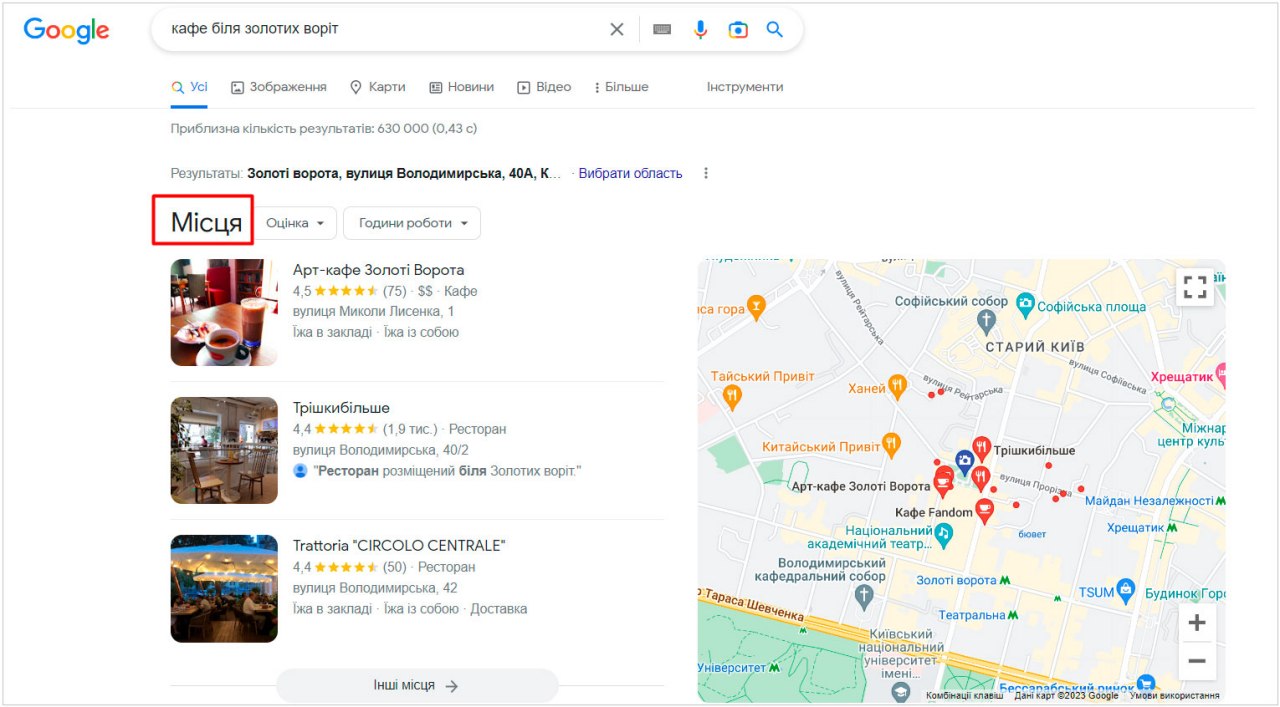
- Create and optimize your Google Business Profile. It’s your showcase in search and on maps. Upload high-quality photos of the outside and inside of your establishment, add a menu or price list, and collect reviews from real customers. When someone searches for “cafes nearby,” it’s the listing with photos of dishes and a 4.8 rating that will make them choose you over the neighboring establishment.
- Direct traffic to a special page. Do not send people to the corporate website’s home page. Create a separate landing page for local contextual advertising. On it, clearly indicate the address with a map, show a photo of your sign (so that people can recognize it from the street), and post reviews from local residents. The registration form should be simple — just name and phone number, and maybe a choice of services. Add trigger phrases: “Serving Otradny and neighboring areas since 2015,” “5 minutes walk from Pochayna station.”
- Make your website smartphone-friendly. 80% of local searches come from mobile devices — people look for a hair salon while riding the subway. If they can’t read the address or click the “Call” button on their phone, you’re losing customers. Check whether your website loads in 3 seconds, whether the phone number is visible without scrolling, and whether clicking on the number automatically dials it.
- Measure real results. Connect call tracking—a service that shows you which ads and keywords are generating calls. Without it, you’ll be guessing whether your advertising is working or not. Set up goal tracking in Google Analytics: phone clicks, form submissions, route planning. Use UTM tags for all advertising links — this will help you understand which campaign brings in more leads.